
9 Growth Loops Behind the Fastest-Growing Products (30+ Real Examples)
In 2007, Apple shipped an iPhone with a default email signature: “Sent from my iPhone.”, and so every email sent from an iPhone was an ad. The recipients saw it, some bought an iPhone. Those iPhones shipped with the same signature.
The sharing was baked into the default state of the product, and what Apple created was a closed system where using the product generated more users, and those users generated more users, and so on.
A growth loop.
One structural note you’ll notice in the examples we’ll go through below is that many acquisition loops, like the branding, “Powered by Typeform” or the framer.com subdomain, are a constraint of the free or entry tier, not a feature. The free user becomes the distribution channel without choosing to be, and the paid plans remove it. That opt-out is also a pricing signal: the companies most motivated to remove someone else’s logo are the ones with enough scale and brand-consciousness to matter.
The growth loops
1. Referral loop
The referral loop is the easiest to spot and the hardest to build well. The test is whether the sharing would happen even without a growth team pushing it. Look for actions in your product that require someone outside your user base to participate, such as signing, attending, or receiving. If that person has to touch your product to complete the action, you have the seed of a referral loop.
Incentive programs like Dropbox’s storage offer can accelerate the loop, but if sharing only happens because of the incentive, the loop stops when the incentive does. The sustainable version is the one where sharing is load-bearing, built into what the product does, not layered on top.
The bilateral reward
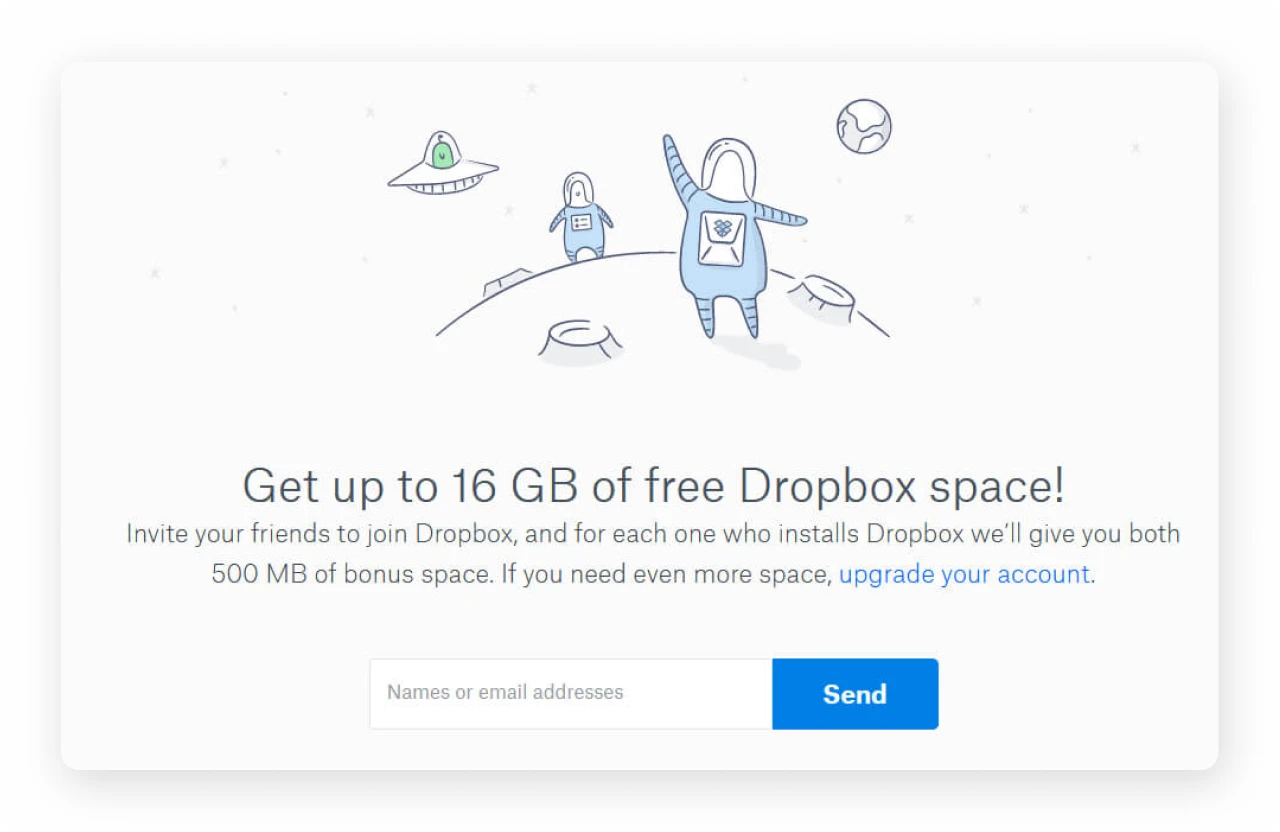
Dropbox built its referral program with two design decisions that made it work. The reward was given to both the referrer and the person they invited (500MB of free storage).
Most referral programs reward only the new user, but a bilateral design like this is more lucrative for the person sharing, because they get rewarded too. The reward was also the product itself. Not a gift card or a discount on something else, but more of the thing you were already using. In the end, the users most likely to engage with the referral program were exactly the users who wanted to use Dropbox.
The tiered reward ladder
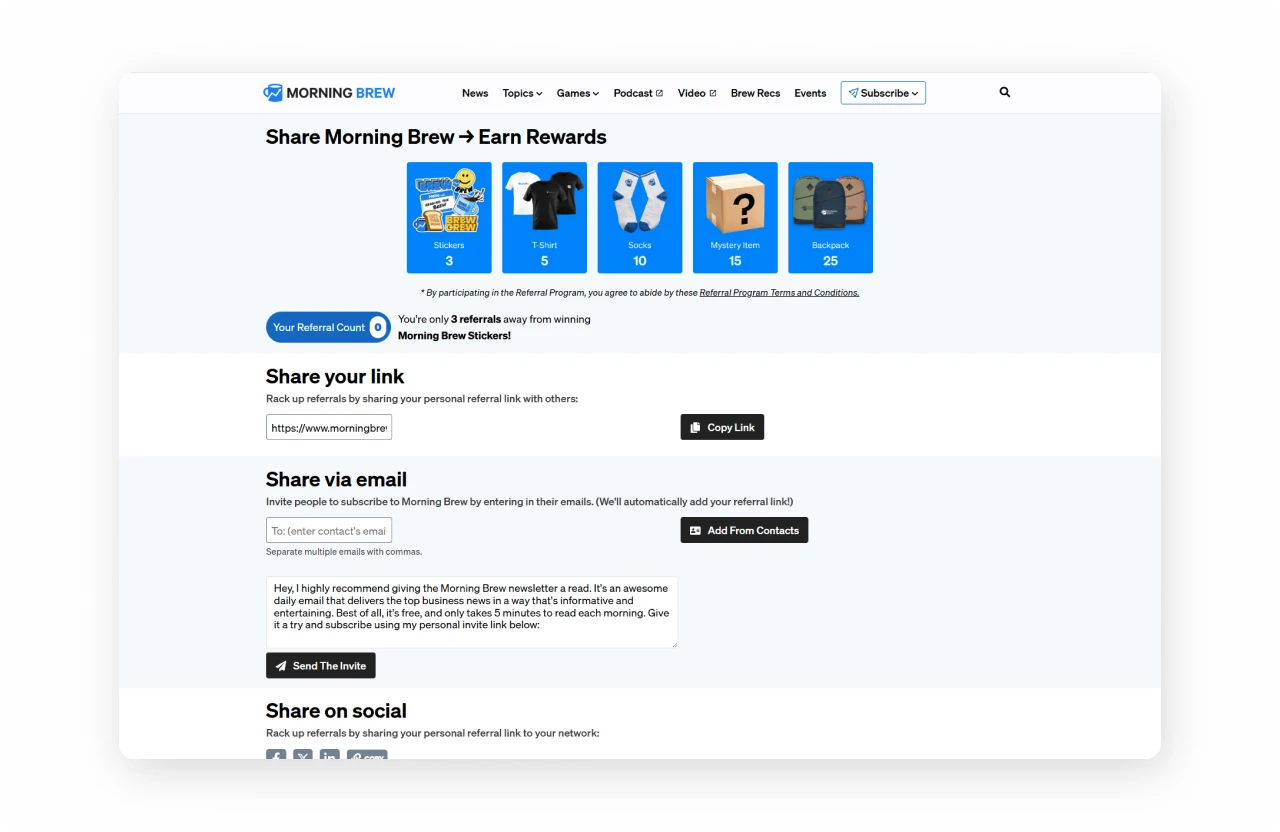
Morning Brew is a free newsletter that has a referral program with a tiered merchandise ladder.
Refer 3 friends, get brand stickers.
Refer 10: get socks.
Refer 15: mystery item.
Refer 25: Morning Brew backpack.
Each threshold makes the next one feel reachable, and the more desirable the reward, the more actively readers pursue it. People who were two referrals away from a hoodie would mention Morning Brew in Slack channels, email signatures, and LinkedIn posts.
The physical merchandise compounds in a second direction, where a high-quality branded hoodie worn by someone in a meeting, when commuting, or in a video call creates free product impressions. The referral program produced branded inventory that functioned as an OOH distribution channel. Each reward earned is a walking ad, paid for by the reader’s own referral behavior rather than the newsletter’s budget.
The reward doesn’t have to be the product. It has to be something the target audience visibly wants, and the tier structure has to make stopping feel like a waste.
2. Product-led growth (PLG) loop
The PLG loop works when experiencing your product is the only way to get the value someone else created in it. The implementation question is whether the non-user needs to interact with your product, or whether they can just receive the output. A Zoom meeting requires interaction. An exported PDF doesn't. To find this in your product, look for moments where your users share something with someone who isn't a user, and ask whether that person has to come into your product to engage with it. If they do, that's your entry point. If they don't, the question is whether you can redesign the output so that they do. The strongest versions make the embedded experience better than any alternative the recipient could use for the same task.
Gated participation
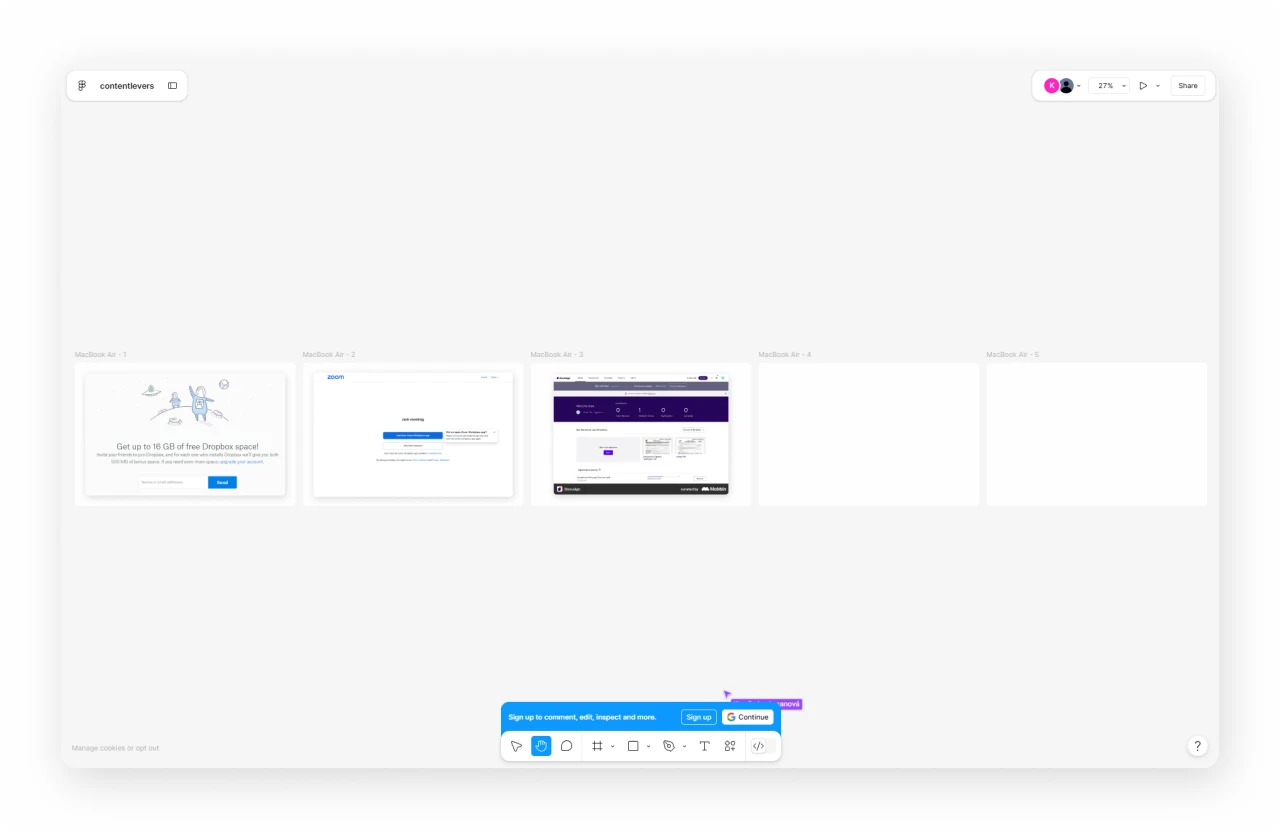
Figma’s files live in the browser, accessible by URL, with collaboration built into the core rather than added on top. This architecture created a loop.
When a designer shares a Figma file, the recipient can view it without an account. The moment they want to comment on a frame, leave feedback on a specific element, or copy a component, a prompt appears above the control bar: “Sign up to comment, edit, inspect, and more.” The gate is specific about what they’re missing and names the actions. You can see enough to know the product is worth using before being asked to sign up, but you can’t participate without one.
The loop’s cross-functional reach is what drove adoption inside companies. Designers shared files with developers for handoffs. Developers created accounts to inspect CSS specs in Developer Mode. Product managers started using it for wireframes. The product spread horizontally because collaboration in Figma requires everyone involved in a project to be inside it, not just the designer who built the file. Every discipline that touches design became an entry point.
Product as a demo
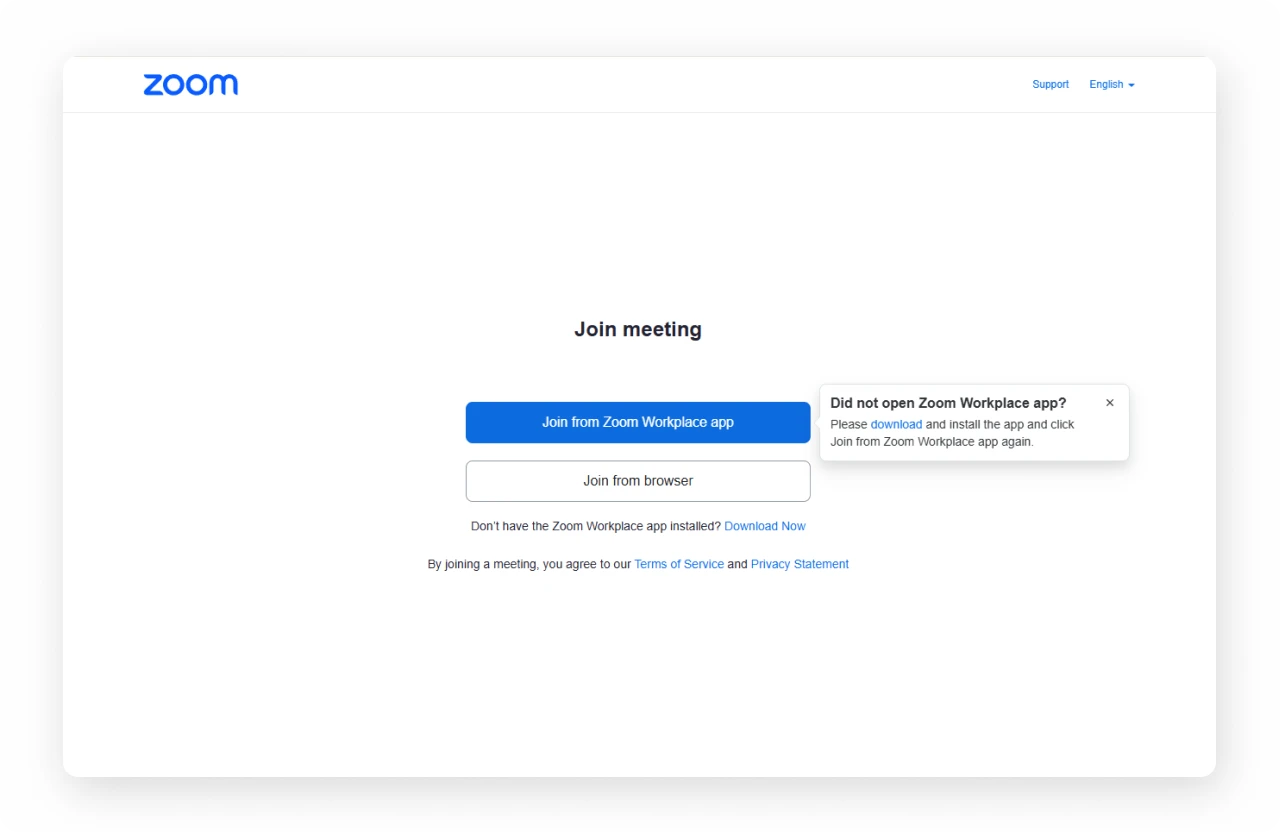
Every time a Zoom user schedules a meeting, they send an invite to everyone on the call. Recipients who’ve never used Zoom have to download the client or open the web app to join. The meeting itself is the demo, they experience the video quality, the screen sharing, the reactions, and the waiting room. No referral link required and no incentive offered.
The host’s decision to use Zoom automatically creates a product experience for every participant. At the scale Zoom operates, millions of meetings per day, that’s millions of unsolicited product demos happening daily.
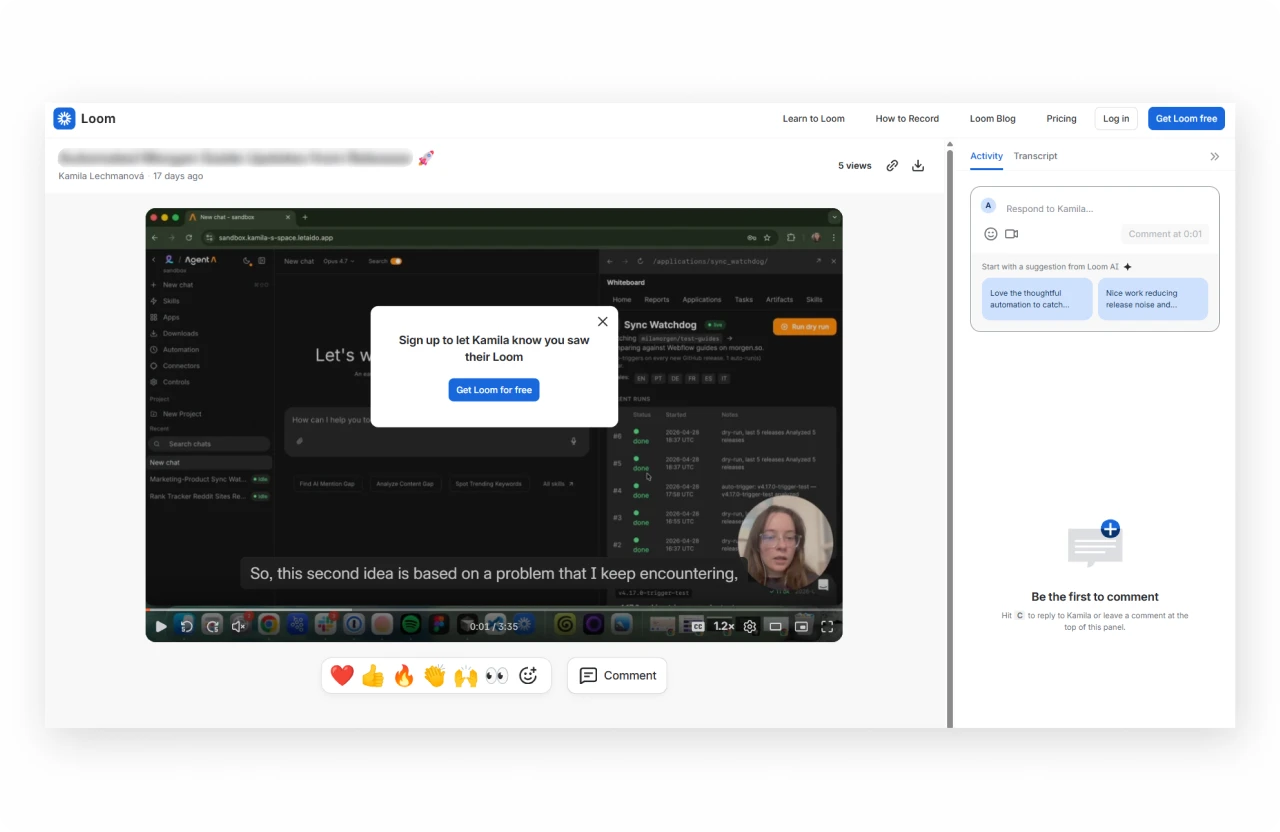
Loom videos are watched inside the Loom player, not as file downloads. The viewer lands on a Loom page showing the recording, the timeline, and the ability to leave timestamped comments. A “Record a video” call-to-action sits on the same page as the video they’re watching.
The mechanic works because the use case is obvious in context. Someone watches a colleague walk through a design or explain a bug via Loom, and the product creates demand for itself through the experience of receiving it, no pitch required.
Branded embeds
Tally, Typeform, Intercom, and Better Stack each embed their product inside someone else’s context and let non-users experience it before making any decision about it. All four offer white-label options at paid tiers, which means most customers show the branding by default.
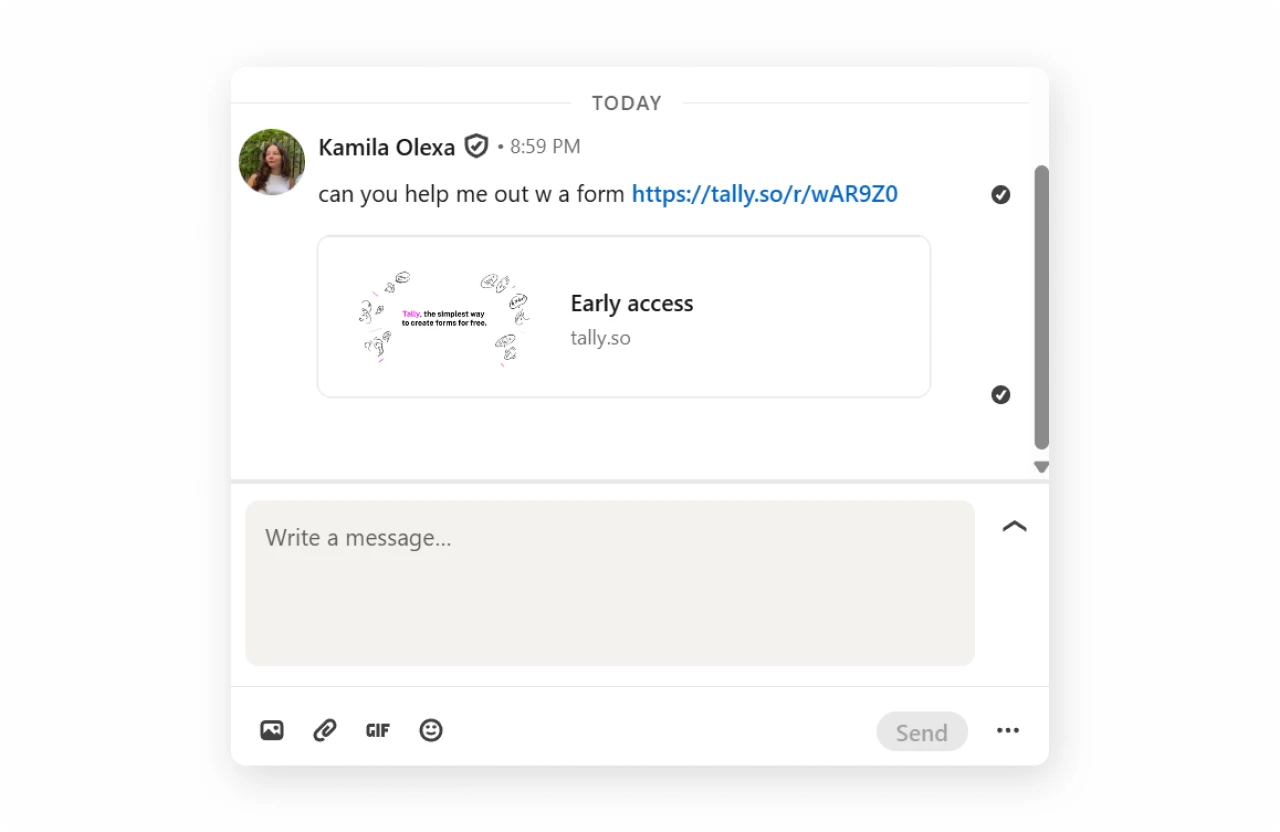
The form tools use branding in several places:
- Tally publishes every form on a tally.so URL
- Typeform shows “Powered by Typeform” in its corner AND has a Typeform loading page before the form shows
SaaS surveys, creator questionnaires, product feedback forms: the people answering them are disproportionately the same people who build forms themselves. A marketer completing a vendor evaluation in a Tally form has just had an unsolicited product demo in the exact context where they’d have a reason to sign up.
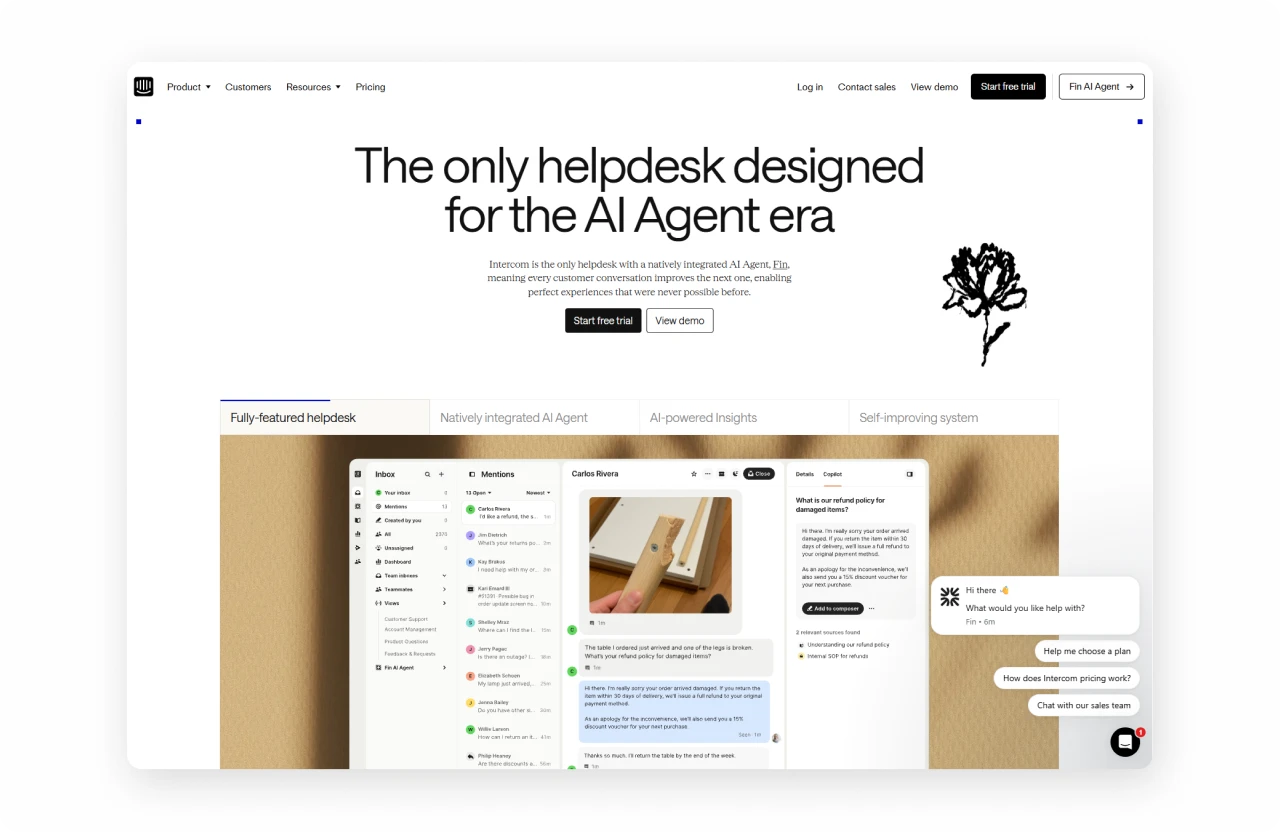
Intercom works through ubiquity rather than a single interaction. The logo sits in the bottom right corner of support widgets across thousands of SaaS products. Most users don’t consciously register it as a brand: they register it as “support.” Intercom has become the visual shorthand for the category. Someone opening a support chat on a SaaS product is disproportionately likely to be someone who builds or evaluates software themselves. They’ve now used the widget, the proactive messaging, the help center, as a user. When they go to set up support for their own product, Intercom is the thing they already have a mental model of.
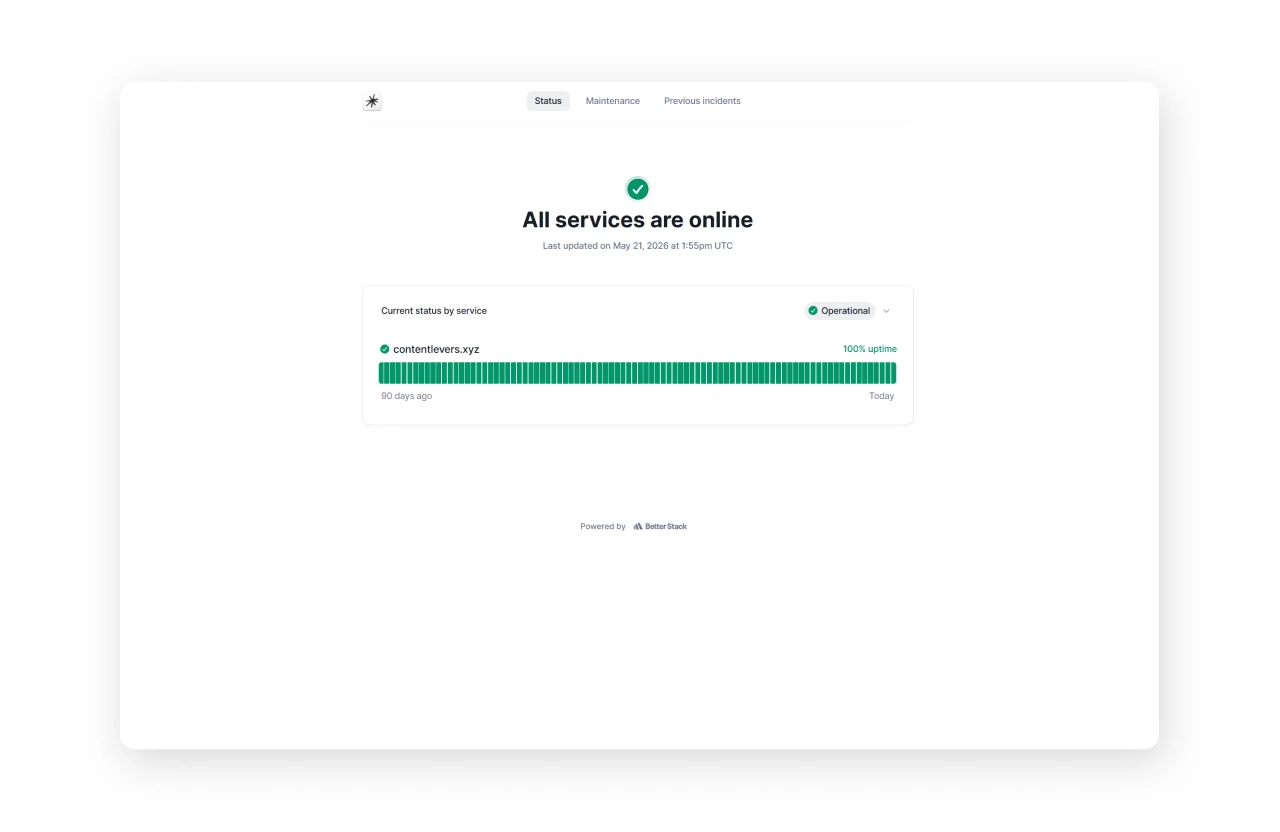
Better Stack is another great example - a developer clicking through a status page during an outage is thinking about infrastructure reliability at that exact moment, which is precisely when “Powered by Better Stack” lands hardest. Each status page also carries a backlink to betterstack.com from the customer’s domain, compounding the embed mechanic with an SEO benefit that scales with the customer base.
The shared mechanic across all four: put the product in front of the right person, in their context, at a moment when they already have a reason to care about what it does.
Progress saving
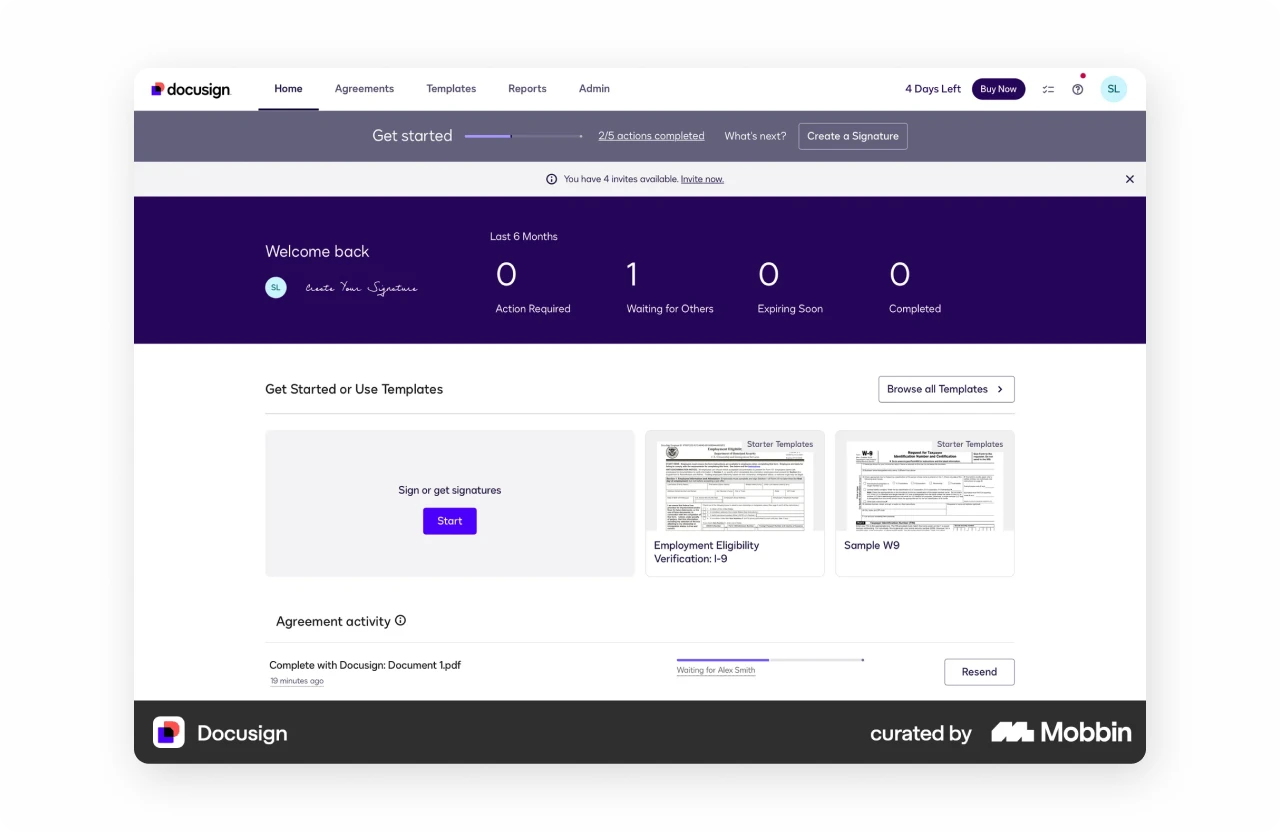
When someone sends a document through DocuSign, the recipient gets a DocuSign link in their inbox, not a PDF attachment. They click through, review the document, and complete the signature inside the product.
What separates this from the Zoom mechanic is what happens the moment the signature lands. DocuSign immediately prompts the signer to create a free account, with one specific reason: to access the document they just signed, saved, and retrievable any time. The prompt is asking them to claim something that already belongs to them.
2 psychological mechanics make that prompt land harder than a standard sign-up ask. The first is the ownership effect: a signed legal document that carries their name. The signer has just completed a meaningful act and created a record. An account feels less like a sign-up and more like claiming custody of something they already possess. The second is loss aversion: the cost of not creating an account is concrete and immediate, not abstract product value, but a potential loss of access to a document they may need to reference.
The transition from recipient to sender then happens naturally. The interface they used to sign is the same one they’d use to send. DocuSign already has their name, their email, and their signature on file.
3. Content discoverability loop
What your users create inside your product needs to have a standalone value outside of it. The value should fit in an existing context that potential users search within.
For instance, a Reddit thread ranking for a comparison query or a Pinterest board appearing for a design idea. The prerequisite is the same in each case: the content has to mean something to someone who has never heard of your platform, and it has to live somewhere they can actually reach it.
To find this loop in your product, look at what users produce when they engage and ask whether any of that output is worth discovering: discussions, reviews, portfolios, datasets, anything with genuine demand from non-users.
Open content, gated participation
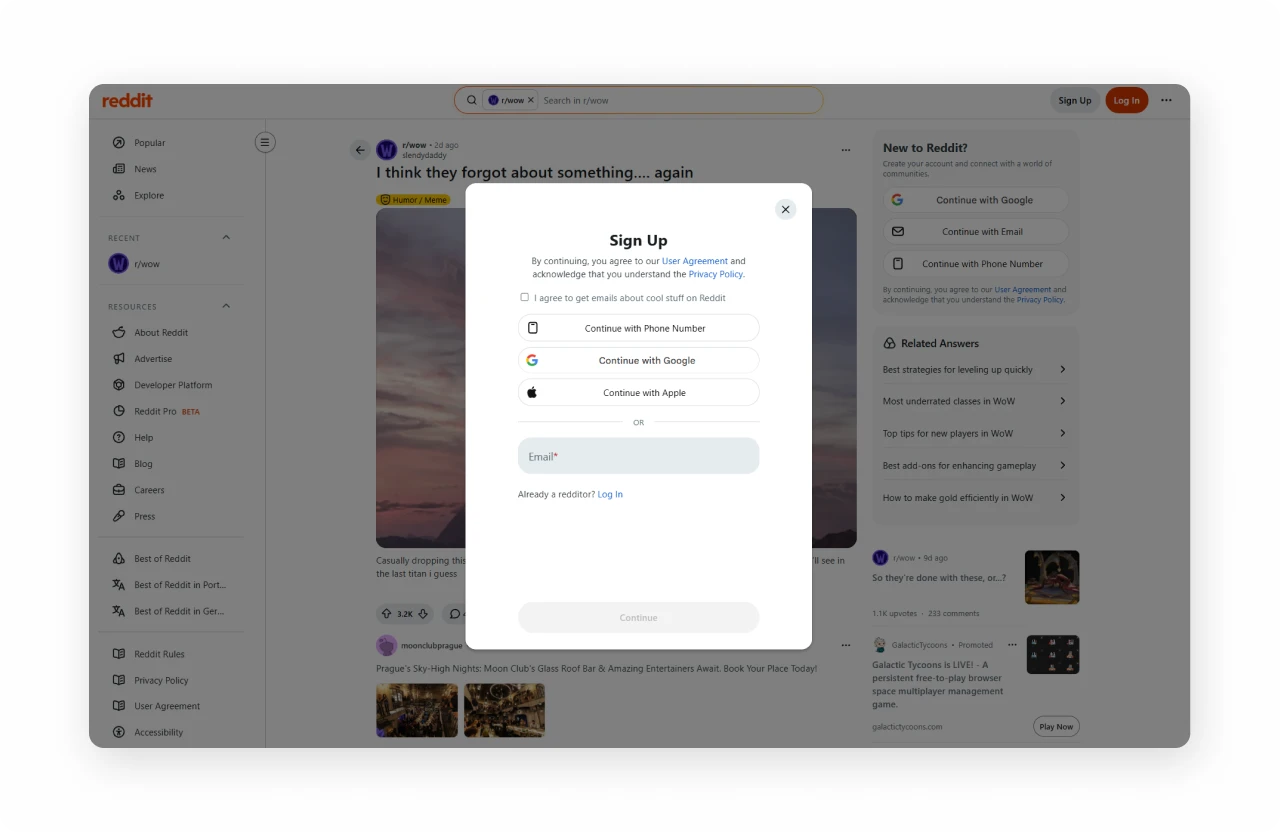
Reddit and Pinterest both index heavily on Google, Reddit threads for discussions, reviews, and comparisons, while Pinterest boards for recipes, design ideas, or outfits. Both platforms made their content publicly accessible without an account, but gated participation.
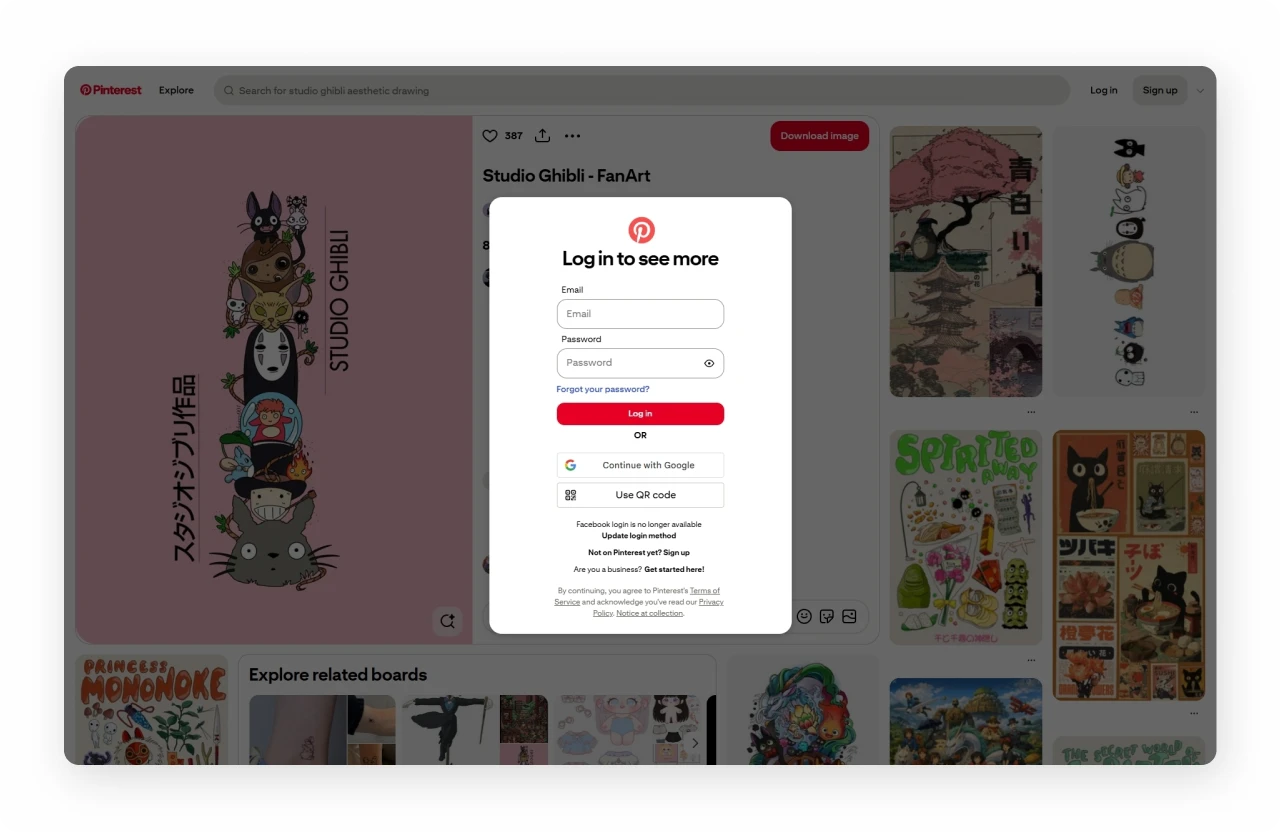
A user lands from a search result and gets a full preview. Reddit shows the thread, the comments, and the entire discussion. Pinterest shows the board and the pins. Enough to confirm there’s value. The moment they try to participate, upvote, open comments, or save a pin, they hit the sign-up prompt.
Users who comment, vote, and save return at much higher rates than users who only read and browse. The login wall at the participation threshold means the users who convert are already primed for the higher-engagement behaviors that drive retention.
Shareable year in review data
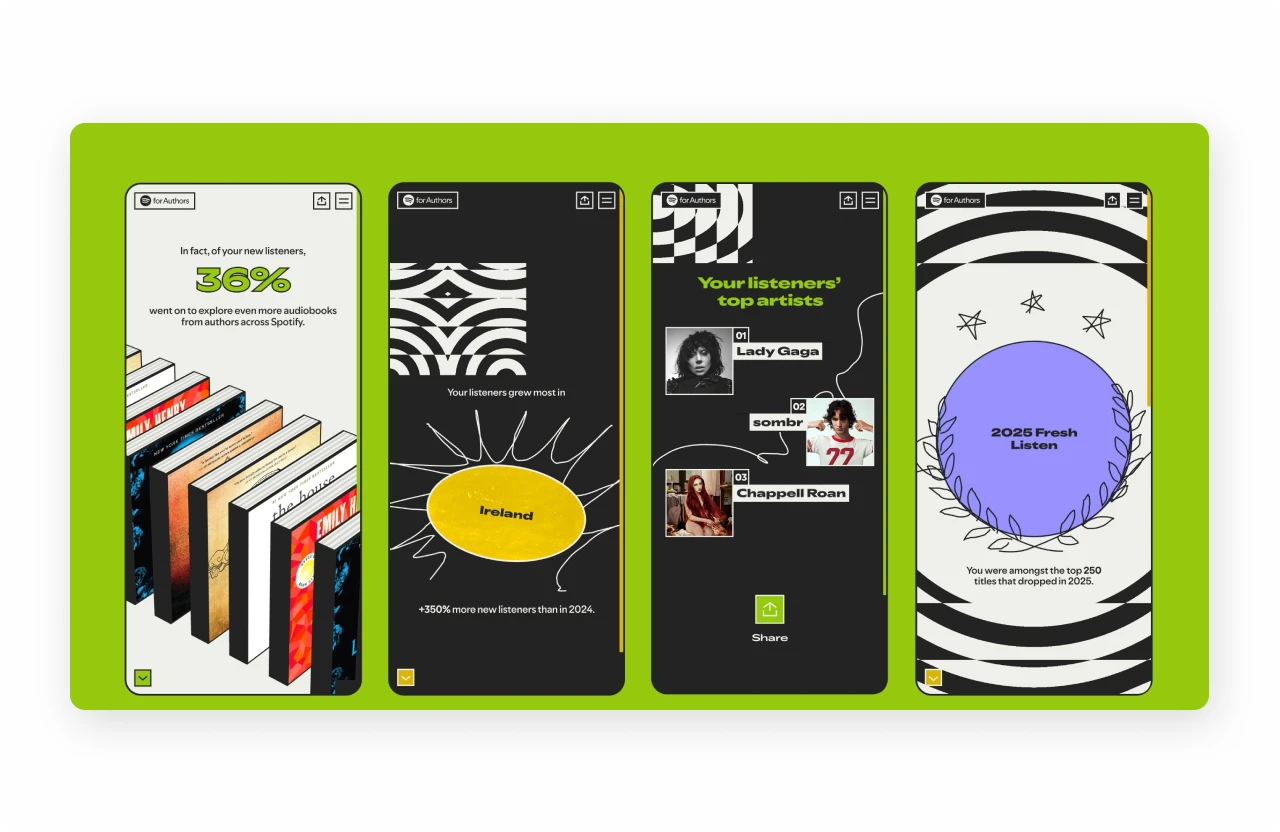
Spotify Wrapped sits at the intersection of UGC and a data loop (more on that below). Most UGC is content users create and publish - a Reddit thread, a Canva template. Wrapped is content Spotify generates from user behavior and hands back to users to publish. The creation is automatic, while the distribution is user-driven.
The data input is a prerequisite. Wrapped only generates a compelling output if the underlying listening data is rich enough, including top artists, listening personality, minutes spent on a single album, etc. The content is personal because the data behind it is genuinely theirs, accumulated over time.
The social distribution is what separates it from UGC that lives on search. Reddit threads and Canva templates get discovered by strangers via search. Wrapped gets seen by friends, colleagues, and followers, people who know the sharer, which makes the FOMO more specific. Non-users don’t just learn that Spotify exists, but see a personal artifact they can’t have unless they sign up and listen for a year.
Spotify runs the same mechanic across every side of its platform:
- Artists get Spotify for Artists Wrapped: total streams, listener counts, playlist adds, top markets, and which song broke through that year.
- Podcasters get their own version with episode plays and audience demographics.
- Advertisers get a campaign recap with reach and performance benchmarks.
Each audience gets data that’s personally meaningful to them, and each has a reason to share it publicly, the artist posting their stream count, the podcaster sharing their listener growth, the advertiser showing campaign results to their team. The loop doesn’t just convert fans into users, it converts every type of participant into a distributor.
4. Creator-led growth loop
The creator-led growth loop runs on one property: when creators succeed on your platform, acquisition takes care of itself. That success takes two forms:
- The work itself: a designer publishes a template, a seller lists an item, and non-users discover the platform through that output.
- The proof of success: a writer shares their revenue milestone, a creator’s patron count is publicly visible, and other creators see the platform is worth joining.
In both cases, the creator acts for their own reasons, visibility, sales, audience, and the platform gets acquisition as a byproduct.
To find this loop in your product, ask whether users can create things non-users would want to find, or earn outcomes visible enough that others would want to replicate them.
The public creator marketplace
Figma, Canva, Etsy, and Framer each built public libraries where user-created work drives acquisition, but the distribution mechanics behind each one differ.
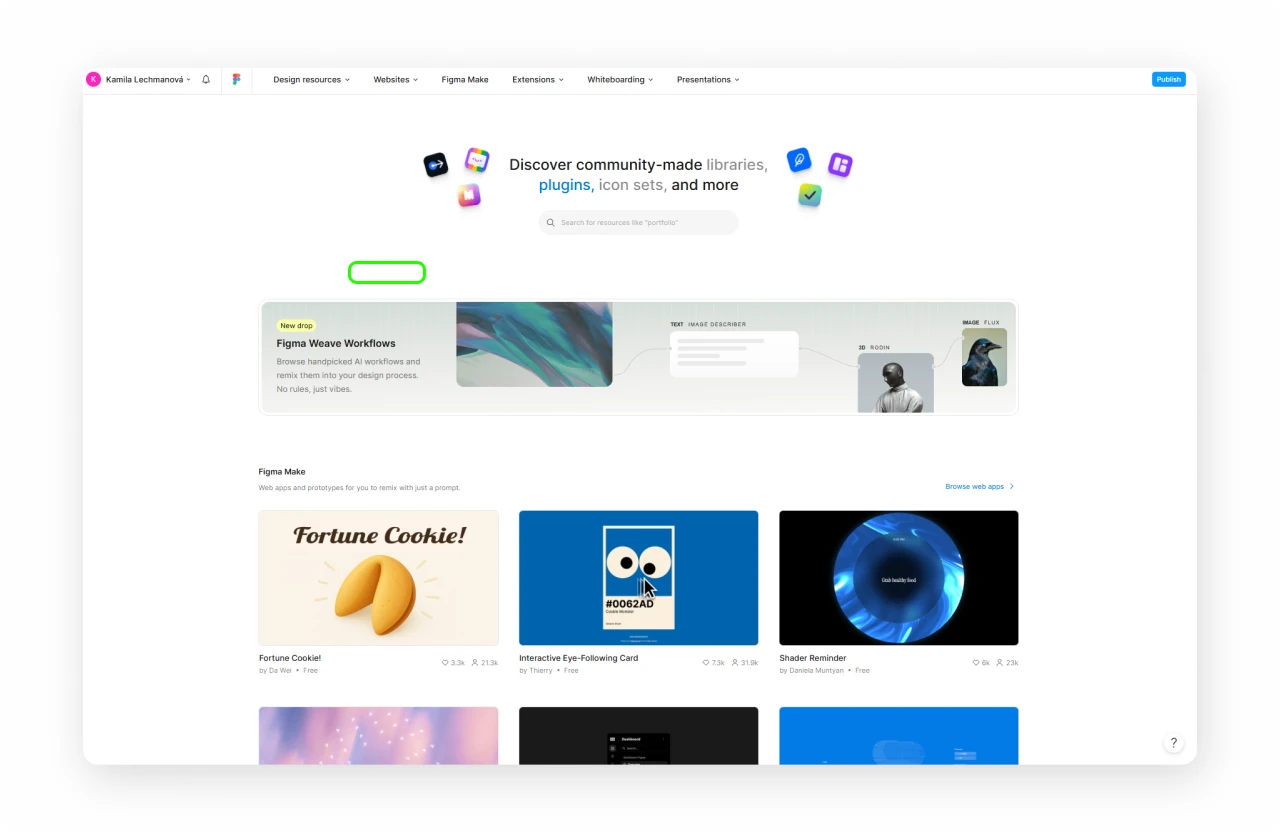
Figma Community works through specificity: a developer searching “modern gradient mesh” finds exactly what they need and gets introduced to Figma through a targeted use case.
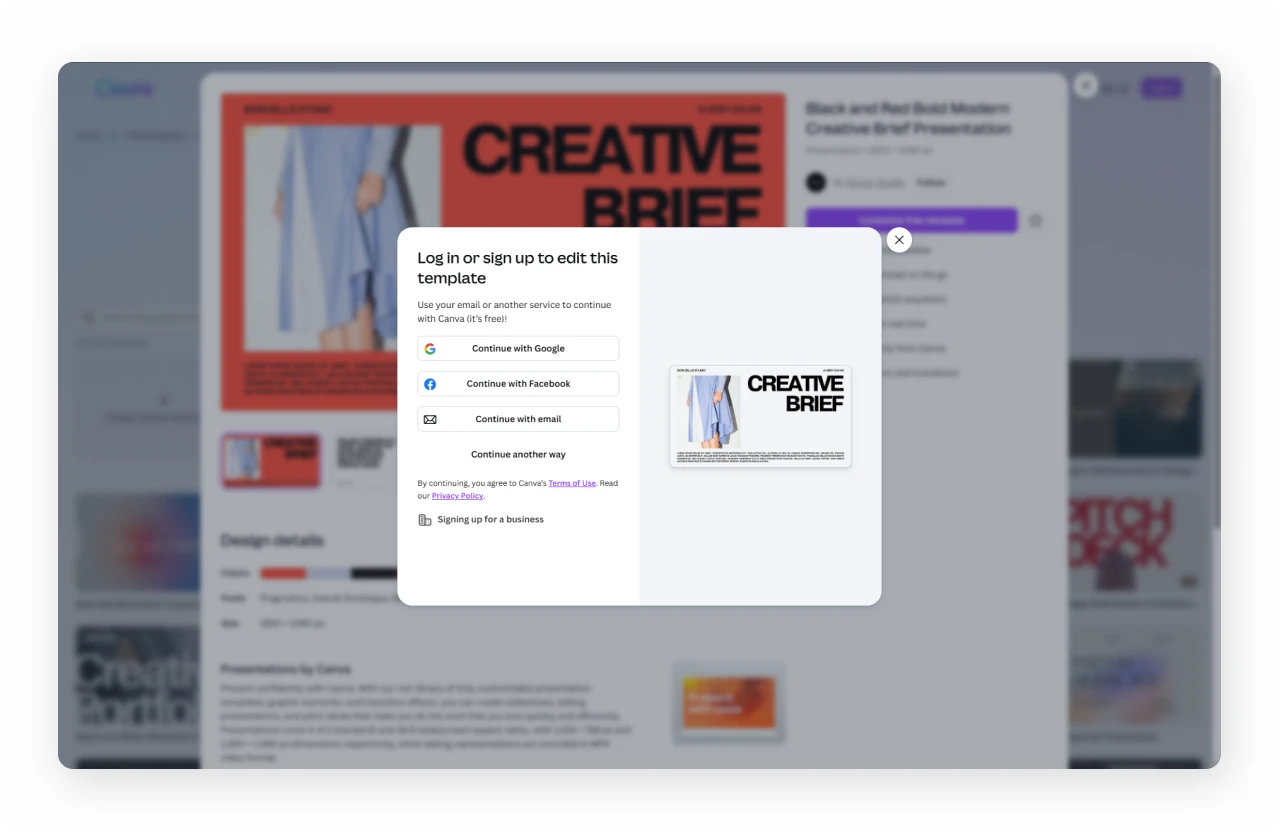
Canva and Etsy both work through volume from different angles.
Canva’s template gallery spans millions of designs across thousands of categories - there’s almost always a Canva result for any design-related search.
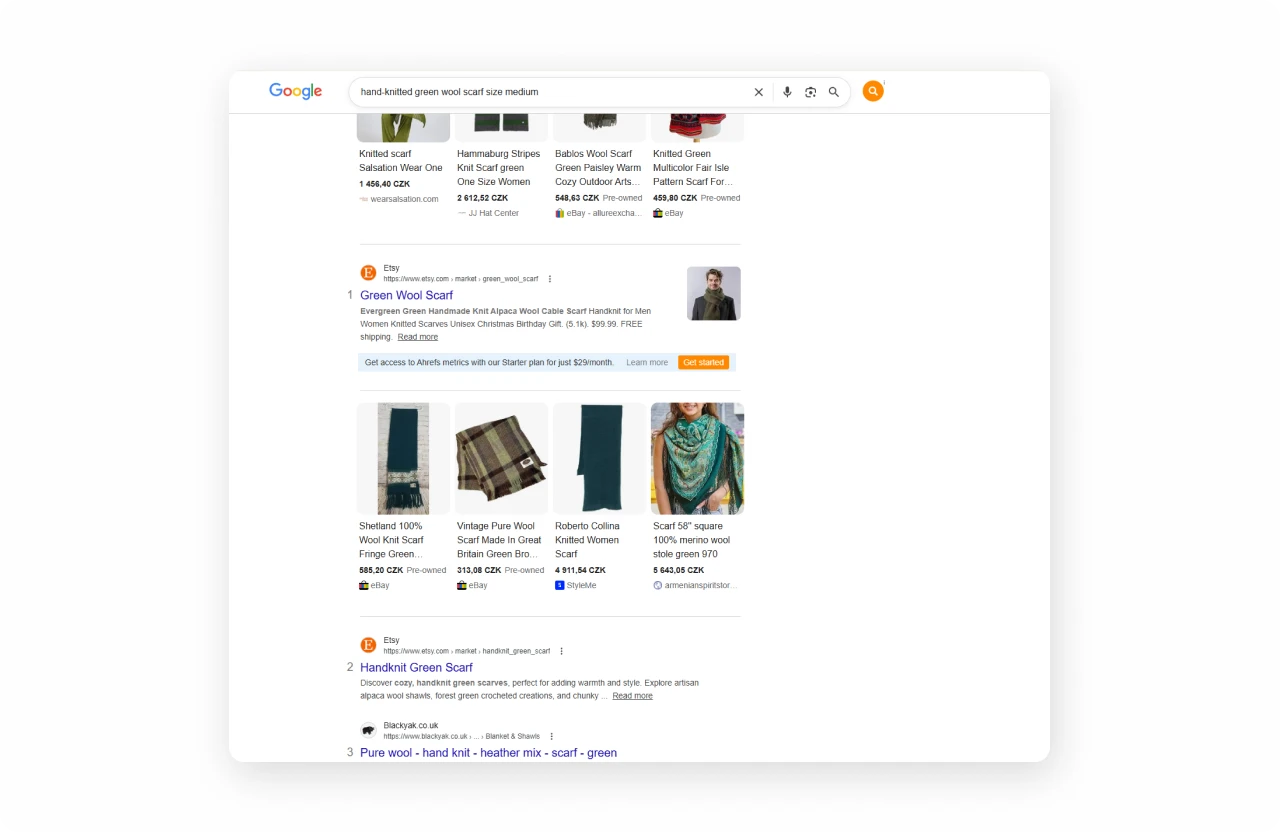
Etsy works through the same mechanism but across physical goods: millions of individual sellers each contribute their own listings, pooling into a search surface no single seller could build. A seller listing 200 handmade items adds 200 indexed pages targeting 200 long-tail queries. “Hand-knitted green wool scarf size medium” ranks where results are sparse and buyer intent is high.
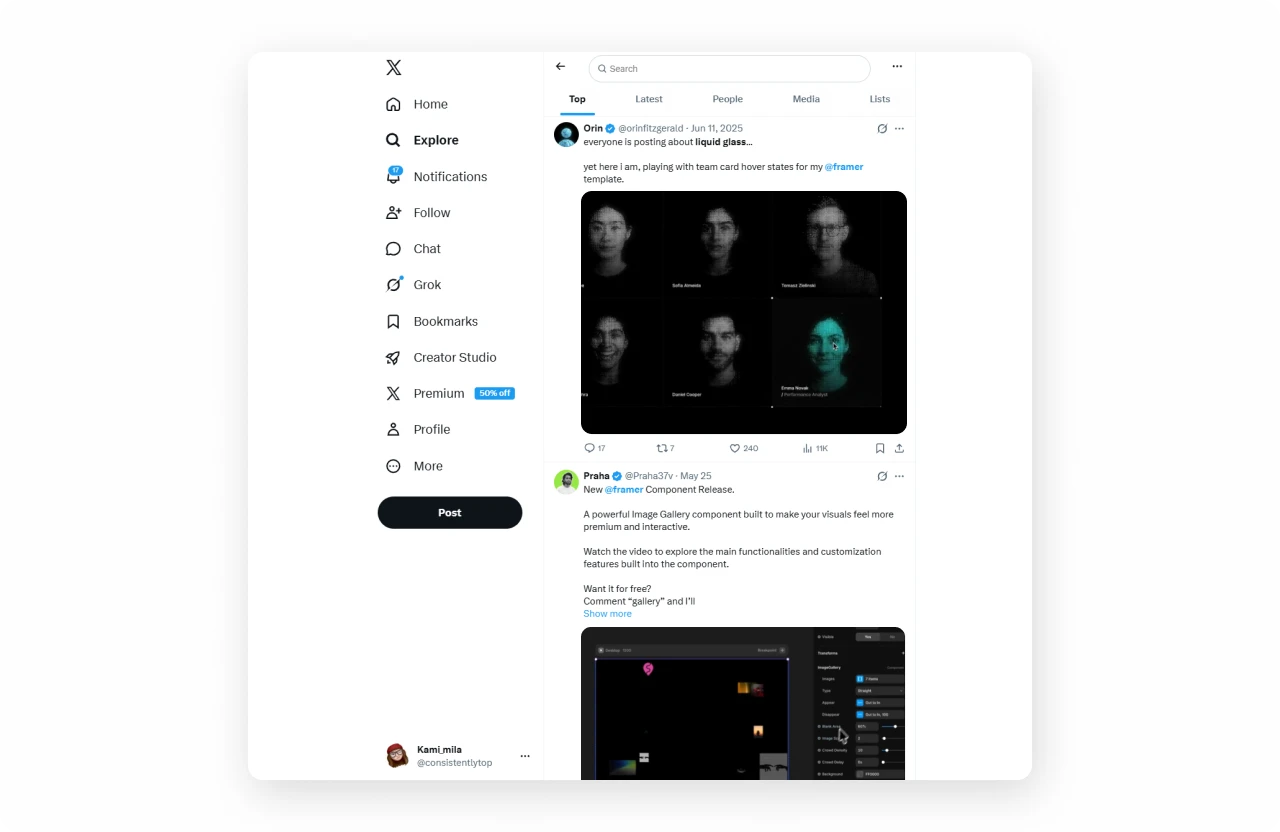
Framer’s version runs on social media distribution rather than search. When a design trend hits, designers race to recreate it in Framer and post on X first, tagging @framer and linking their marketplace listing.
When Apple introduced the liquid glass aesthetic, Framer creators were posting recreations within hours. The incentive is built into the creator’s own goals: visibility, template sales, client leads. Framer gets mentioned in every post as the tool that made it possible, with a link to the template. The distribution fires through the social feed rather than search queries, and it scales with cultural moments (trends) rather than keyword volume.
All four share the same loop structure: creators and sellers who publish gain visibility, which gives them an incentive to publish more. More content expands the library and brings in more users who may become contributors themselves.
The visible creator economics
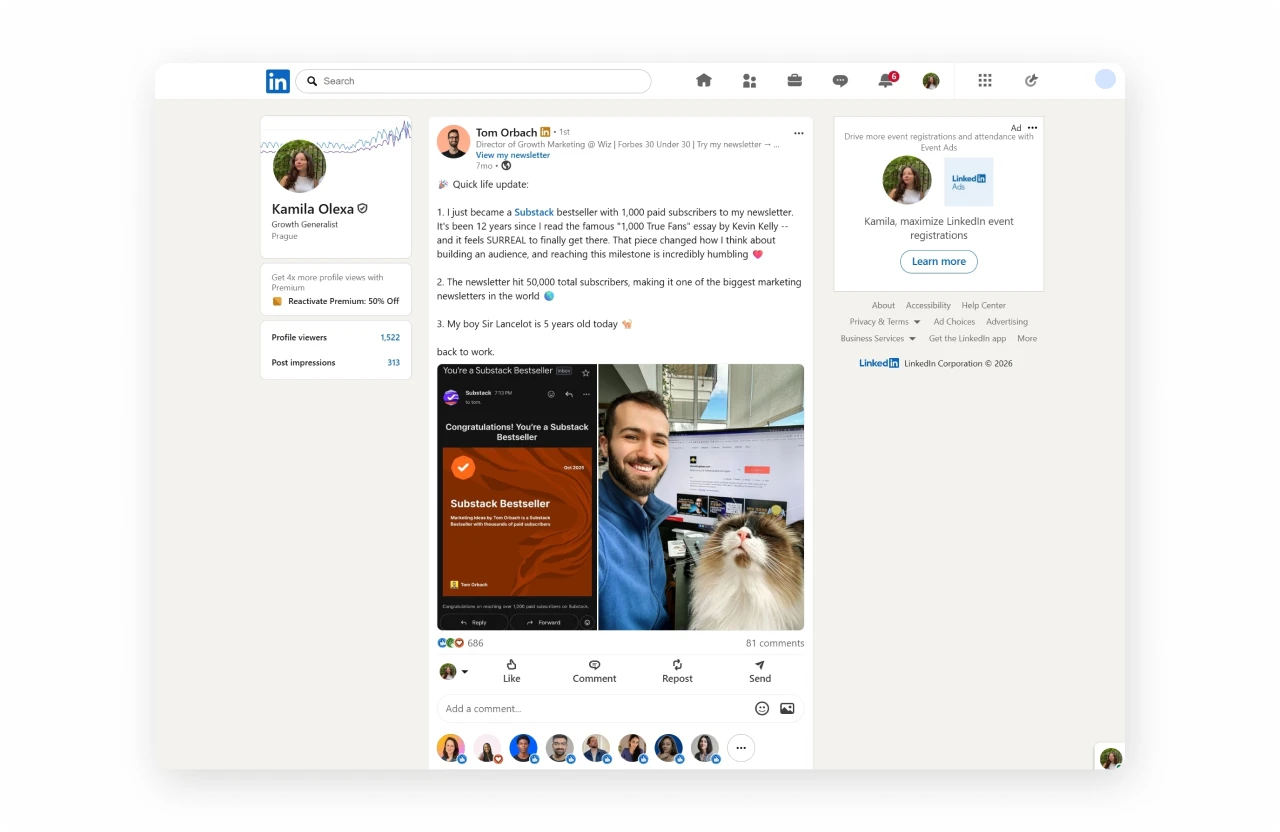
Both Substack and Patreon run the same core mechanic: make creator earnings and traction publicly visible so that success stories do the work of recruiting the next cohort.
Substack made monetization accessible from day one with no follower threshold. Successful writers could earn meaningful income with a small audience, and those earnings were visible. When a newsletter crosses $$$ MRR, the writer posts about it. That post reaches other writers thinking about starting a newsletter, the attribution to Substack is explicit, and the next cohort signs up. Writers recommend other newsletters to their subscribers, turning each writer’s list into a distribution channel for others on the platform.
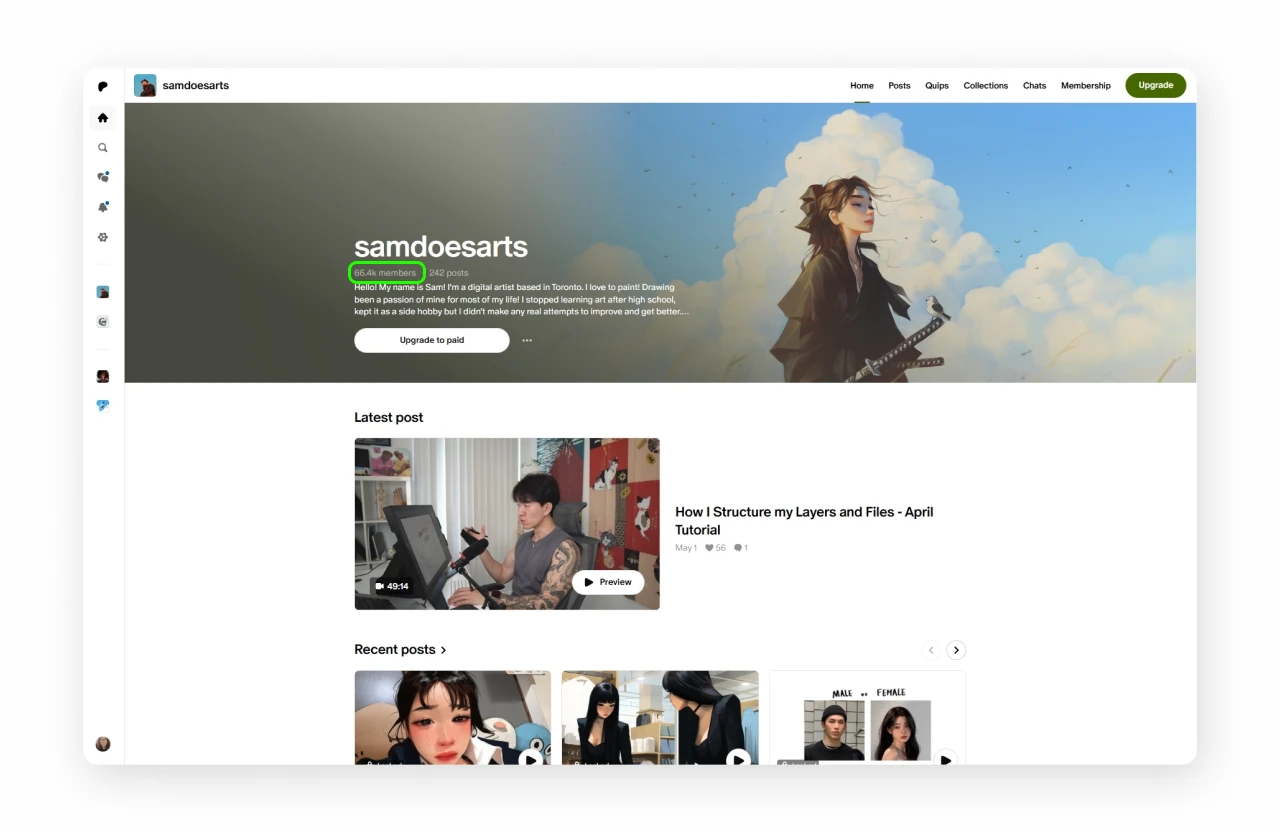
Patreon makes the same mechanic structural rather than optional. Patron counts are public on every creator page by default, visible to fans and other creators alike. For fans, a high patron count signals the work is worth paying for. For other creators, a musician with 2,000 patrons earning $6,000 a month is a more convincing pitch for the platform than any marketing campaign Patreon could run. The numbers are visible without the creator having to broadcast anything.
The creator's success becomes public, and other creators see that the economics are real, they join and bring their audiences, essentially increasing the fans on the platform, potentially producing more successful creators and more visible proofs.
The difference from UGC is intent. UGC creators post to discuss, share, or collaborate. Creator economy creators are building an audience as a deliberate goal. The platform’s job is to make that viable, because creator success is what drives the loop.
5. Community loop
The community loop is most durable when your platform provides something the community can't easily replicate elsewhere, such as moderation tools, discoverability, permanence, or a built-in audience of the right people. The implementation question is whether your product is the reason the community exists, or just a tool a community uses. A community that could move to a Slack channel or a Google Group tomorrow has low switching costs and won't sustain the loop.
To find this in your product, look for whether users are forming informal groups or rituals around it without being prompted. Discord servers, subreddits, and Twitter lists about your product are all signals. Community features rarely create this behavior from scratch, they scale what's already happening organically.
The domain-based expansion
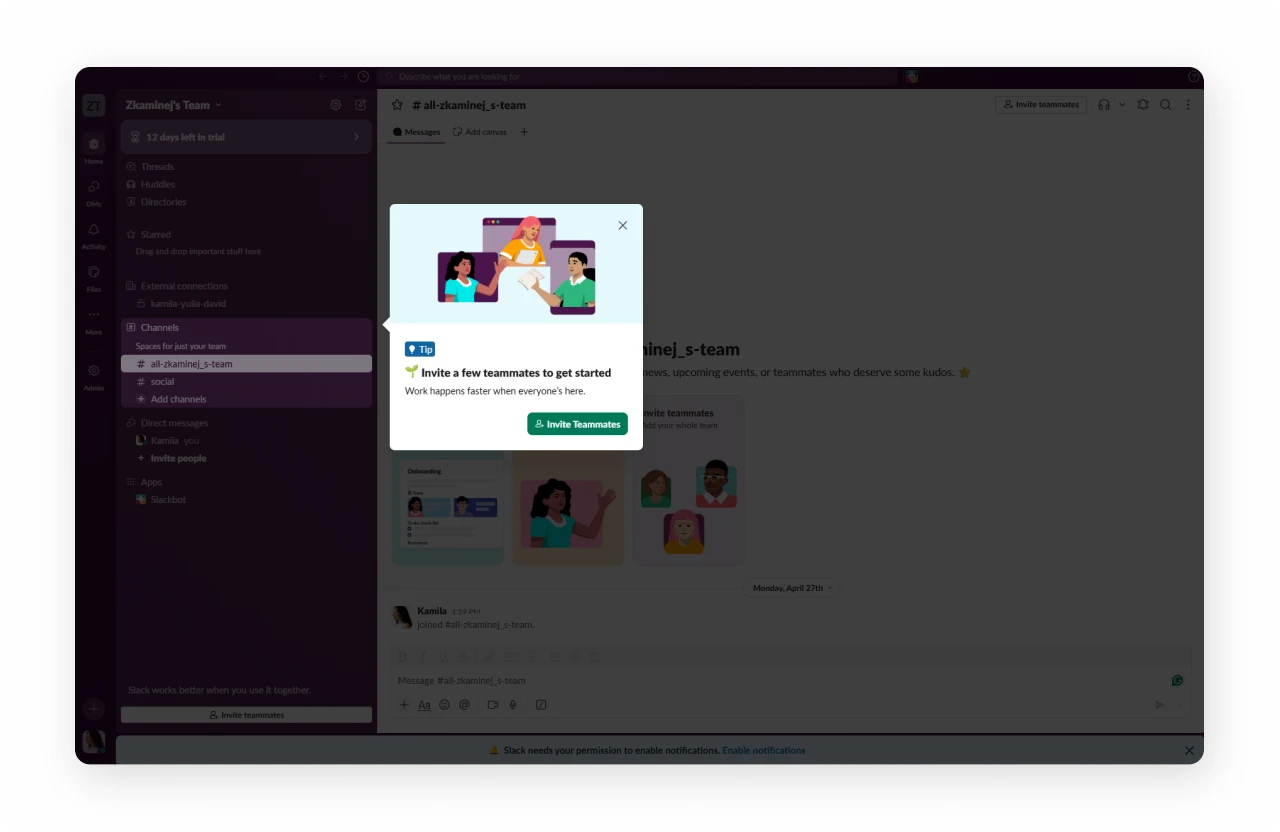
Slack’s loop runs bottom-up, and Andreas broke it down in great detail in his Growth Letter. One person signs up, creates a workspace, and immediately gets pushed to invite coworkers. The entire onboarding funnel is structured around that single action. Once a few teammates are in, anyone with the same email domain can join the workspace with one click, removing the friction of individual invitations.
A team eventually connects with a client or partner organization via a shared channel. Those external users experience the product. Some bring it back to their own org. The loop restarts.
6. Integration ecosystem loop
Initially, the integration loop concerned specific tools interacting with each other within contextually relevant markets. That changed with AI workflows. When a concentrated, high-value user base starts running Claude or other LLMs in their workflows, the products they depend on either integrate or get excluded from the workflow entirely. As Elena Verna frames it, the pull signal is no longer "does it work with X?", it's whether an agent can call your product at all.
The agent layer
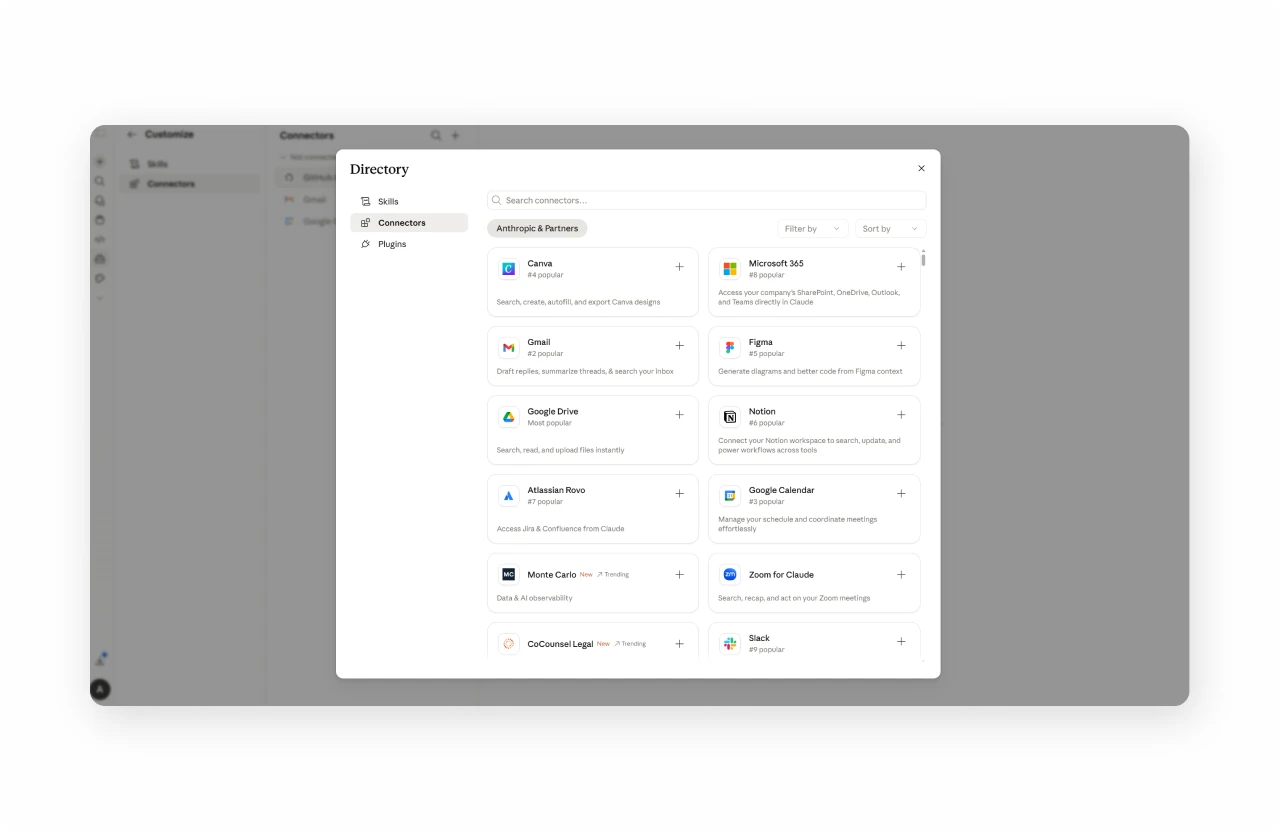
Clay’s user base, concentrated GTM professionals, started building Claude into their research and outreach setups. Clay built the Claude connector to stay inside those workflows. The same dynamic then works in reverse: vendors like Apollo and Clearbit integrate with Clay because being present in a Clay workflow means being in front of the buyers who evaluate and purchase their tools. The user pulls toward Claude, and the vendor pulls toward Clay, reinforcing each other through the same mechanism.
There’s also competitive pressure when one product moves first. When Ahrefs launched a Claude MCP connector, it got built into AI-assisted SEO workflows first. People publishing their research setups mentioned Ahrefs because their agent could make calls. Semrush had to follow, not because users demanded it but because being absent from agent workflows meant being excluded from a distribution channel they hadn’t opted out of.
Elena’s article frames what changed structurally: distribution inverts. You stop asking “how do we get users into our product?” and start asking “how does our product fit into the workflows agents are already running?” If your product isn’t callable, agents route around you, and the companies that moved first get named in the workflow content that trains the next wave of adopters. Brilliant.
Retention growth loops
The six loops above generate new users as their primary output, and the cycle closes through acquisition.
The three loops below work differently: they don’t directly bring in new users. They keep existing users engaged, make the product harder to leave, and reduce the moments where someone would otherwise churn.
A referral loop that brings in users who churn in week two isn’t compounding. A behavioral loop that pulls users back daily, a data loop that makes switching feel like starting over, or a monetization loop designed around the moments users would leave.
1. Behavioral / habit loop
The behavioral loop is built around a trigger-action-reward cycle: something pulls users back, they do the thing your product is built for, and the result reinforces the return.
To find this in your product, look at what your most engaged users do on a regular schedule and ask whether you can make that cadence more visible, more social, or more rewarding. The trigger has to match the rhythm of the use case. A daily trigger on a product people use monthly creates friction, not habit.
Public activity logs
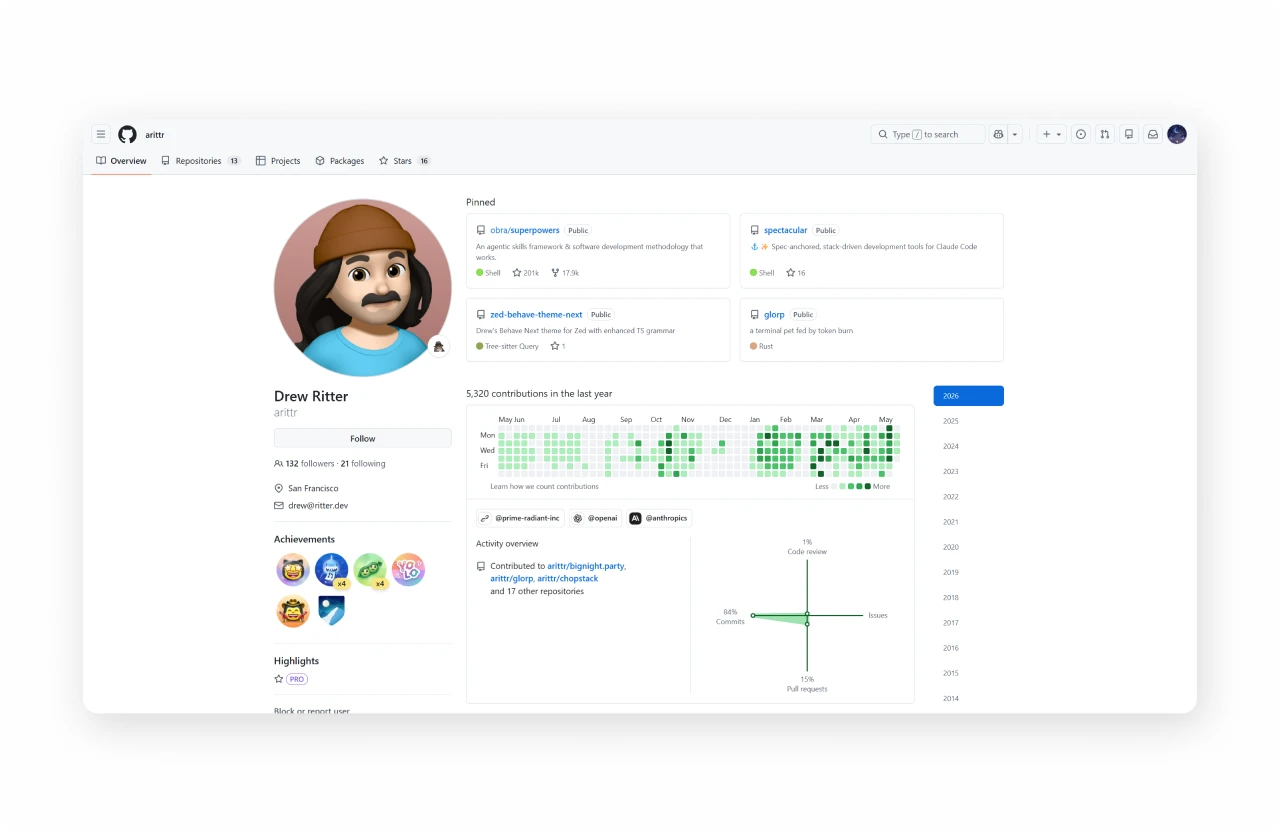
GitHub’s contribution graph (the grid of green squares on every public profile) makes consistency visible and public.
A developer’s commit history is a professional signal. The graph appears on the profile that comes up when someone Googles your name, that a recruiter sees before an interview, and a collaborator checks when deciding whether to work with you. Maintaining a streak is partly about personal habit and partly about what the profile communicates to everyone who lands on it. The social accountability layer is what makes GitHub’s behavioral loop stickier than a private counter. A private streak is motivating, but a public one creates stakes.
Notifications
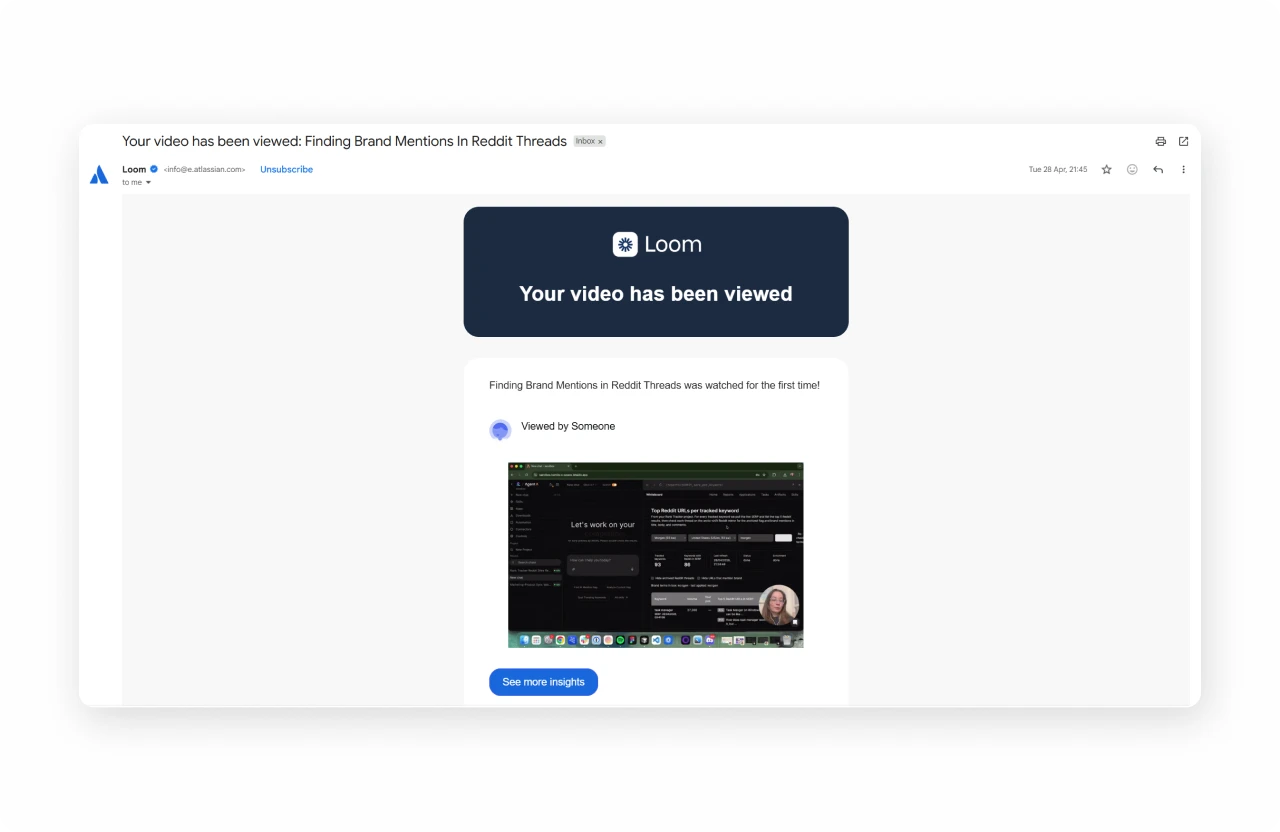
Loom’s notification design is specific enough to create behavior. When someone watches your video, you get an email that says someone watched it and when. The notification converts an async recording into a real-time status update on whether your message landed.
The loop compounds because every sent Loom creates both a notification trigger for the sender and a product experience for the recipient. Frequent senders accumulate frequent notification triggers. Recipients who watch frequently see the “Record a video” button at the top of the player. Both patterns push toward more recordings, more views, more notifications.
Gamification
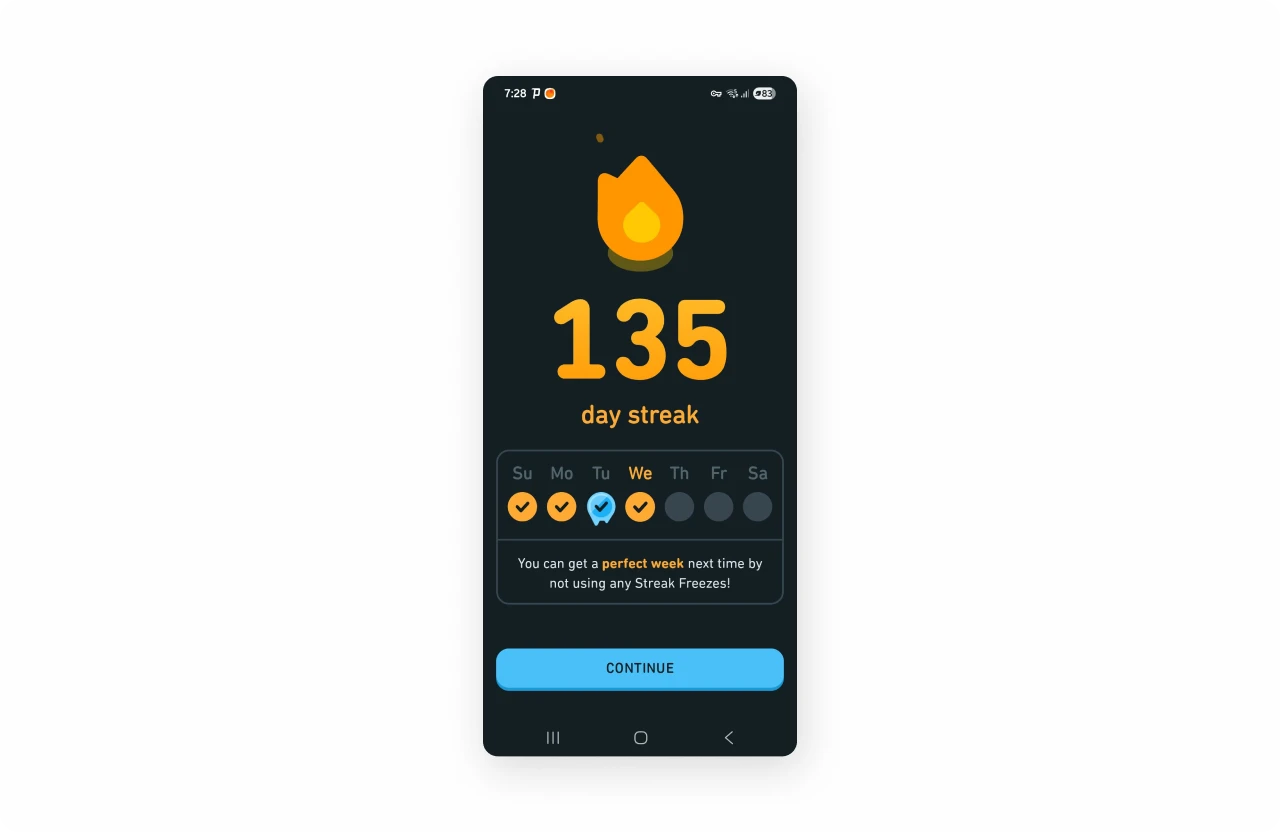
Duolingo’s streak is an anchor with a behavioral system that has multiple reinforcing mechanics:
- A learner protecting a 30-day streak is also accumulating XP
- They compete in a weekly leaderboard against others at the same level
- They can earn energy to continue lessons (free users)
Each mechanic creates a different reason to return: the streak creates loss aversion (breaking it feels like losing something real), the leaderboard creates competitive pressure, and the energy re-engages them by earning it via practice lessons, watching ads, or waiting.
A user with a 100-day streak has more to lose than one with a 3-day streak, so the behavioral pull gets stronger the longer someone stays engaged.
Reputation score
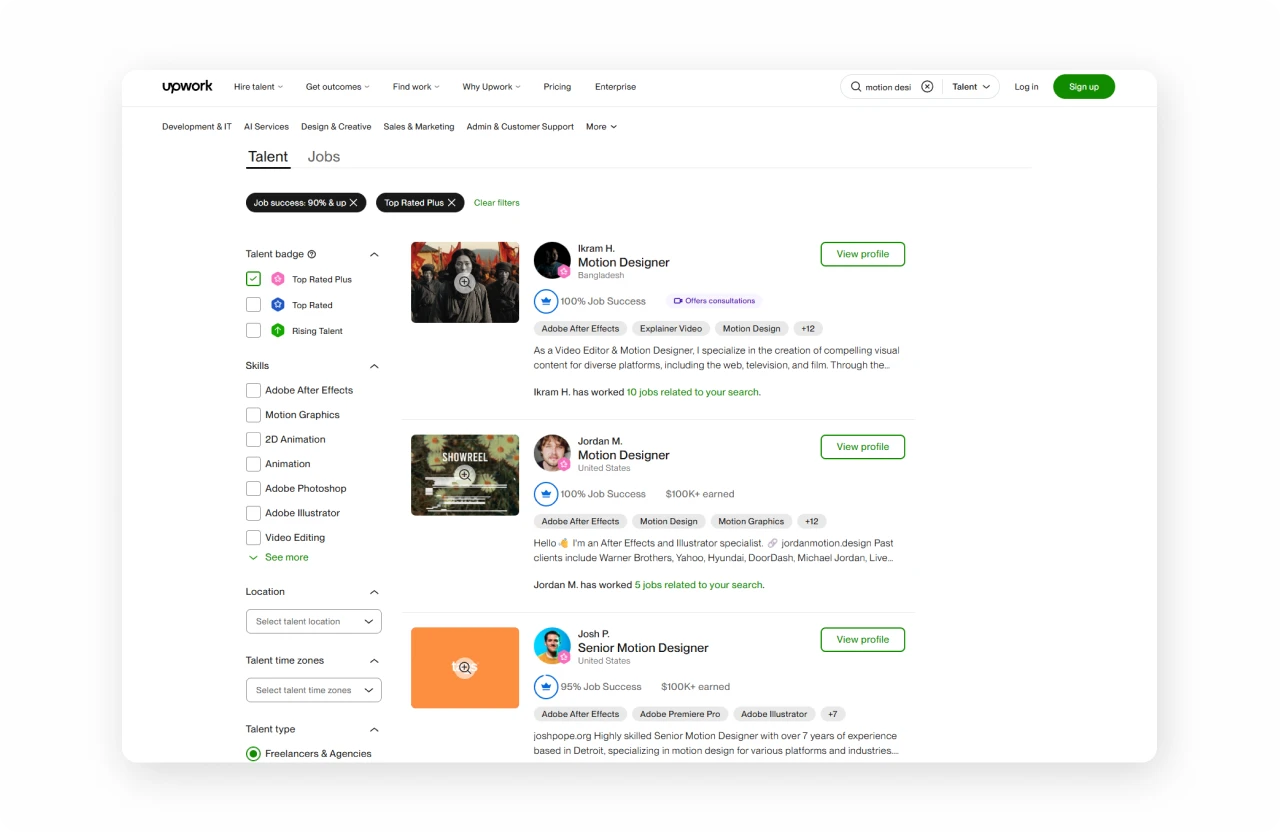
Upwork’s Job Success Score (JSS) is a rolling metric: contracts completed, client feedback, and repeat hire rate. The score appears on every freelancer’s public profile, visible to every client who considers hiring them.
A freelancer with a 90%+ JSS qualifies for Top Rated status, which unlocks placement priority in search results and direct invites from clients who filter by badge. More invites mean more projects without the cost of competing in open proposals.
More projects of high quality sustain the JSS, so if freelancers deliver good work, their score rises, they unlock a badge, and their visibility increases, getting them more invites and more projects booked, which is a financial incentive to keep the quality high. The trigger is the knowledge that the score is always recalculating.
Upwork benefits because the JSS shapes freelancer behavior toward the outcomes clients care about most: reliability and quality. Clients who have good experiences repeat. Repeat clients generate long-term contracts, which Upwork weights heavily in the JSS, which reinforces the quality behavior further.
FOMO
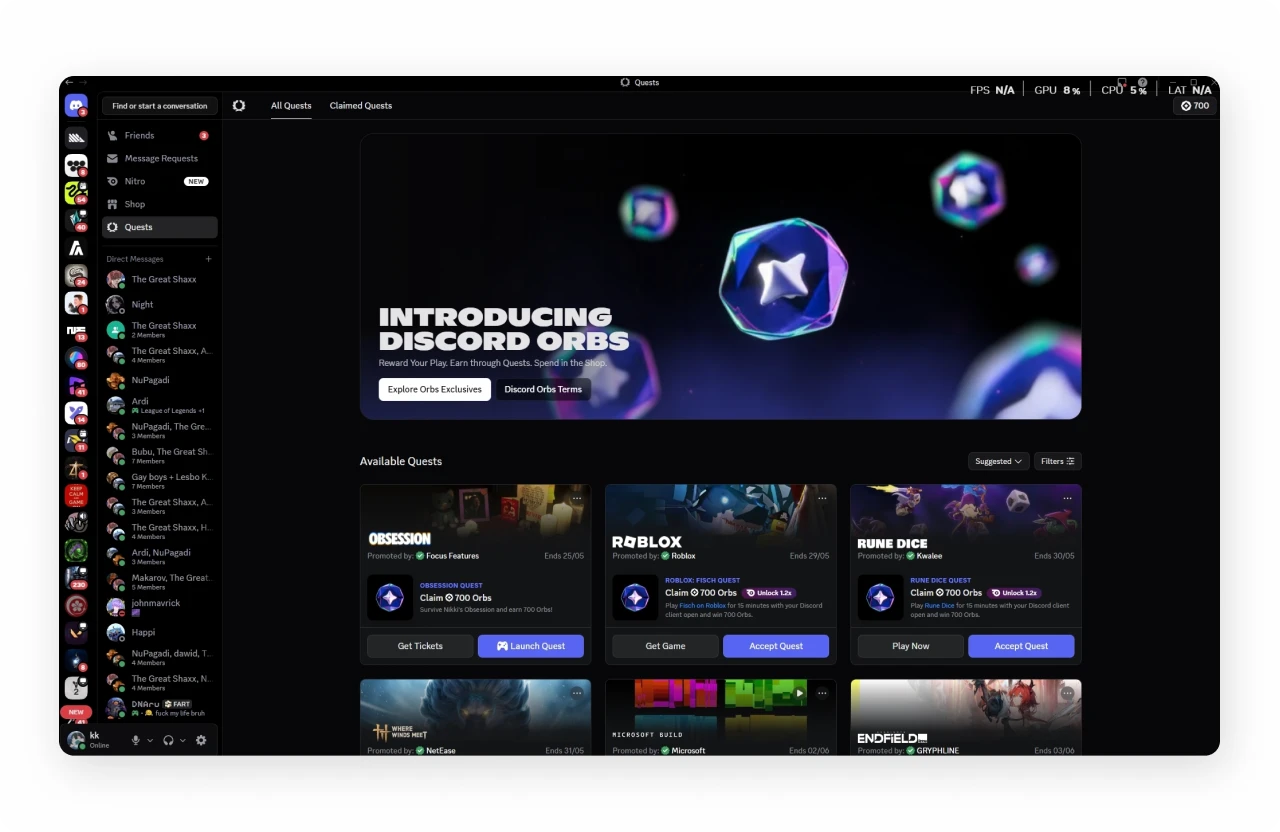
Discord knows more about its users’ gaming behavior than almost any other platform. Users connect their Steam accounts, display the games they’re currently playing, and Discord logs that activity.
I assume that intelligence is used as a foundation for Discord Quests: time-limited challenges, built in partnership with game publishers, where completing a specific in-game action earns a reward. The quests are time-limited, and the reward is usually an exclusive in-game item, a cosmetic, or a Discord profile decoration that can’t be obtained any other way.
The loop runs on two types of pressure simultaneously:
- For active users, the quest is a reason to complete a specific action they might have skipped, a dungeon, a ranked match, or a crafting milestone.
- For inactive users, the quest is a re-engagement trigger. The reward is exclusive and time-limited, which means the cost of ignoring it is permanent.
FOMO is the trigger because the rarity of the reward is what gives it weight.
The Nitro angle closes the second loop.
Discord Nitro subscribers get access to bonus quests or enhanced rewards that free users don’t. A user who wants to get the reward faster has a concrete reason to upgrade because it’s tied to a specific thing they want.
2. Data loop
The data loop requires that your product improves in a way users can actually feel, not just in a way that looks good in a model evaluation. Many products collect plenty of data but don't translate it into an experience that's noticeably better over time.
To test whether you have this loop, ask what your product does for a user who has been with you for two years that it can't do for someone who signed up yesterday? The loop only compounds when the data advantage is real enough that users would rather stay than start over somewhere else, because switching means losing the personalization.
Personalized experience
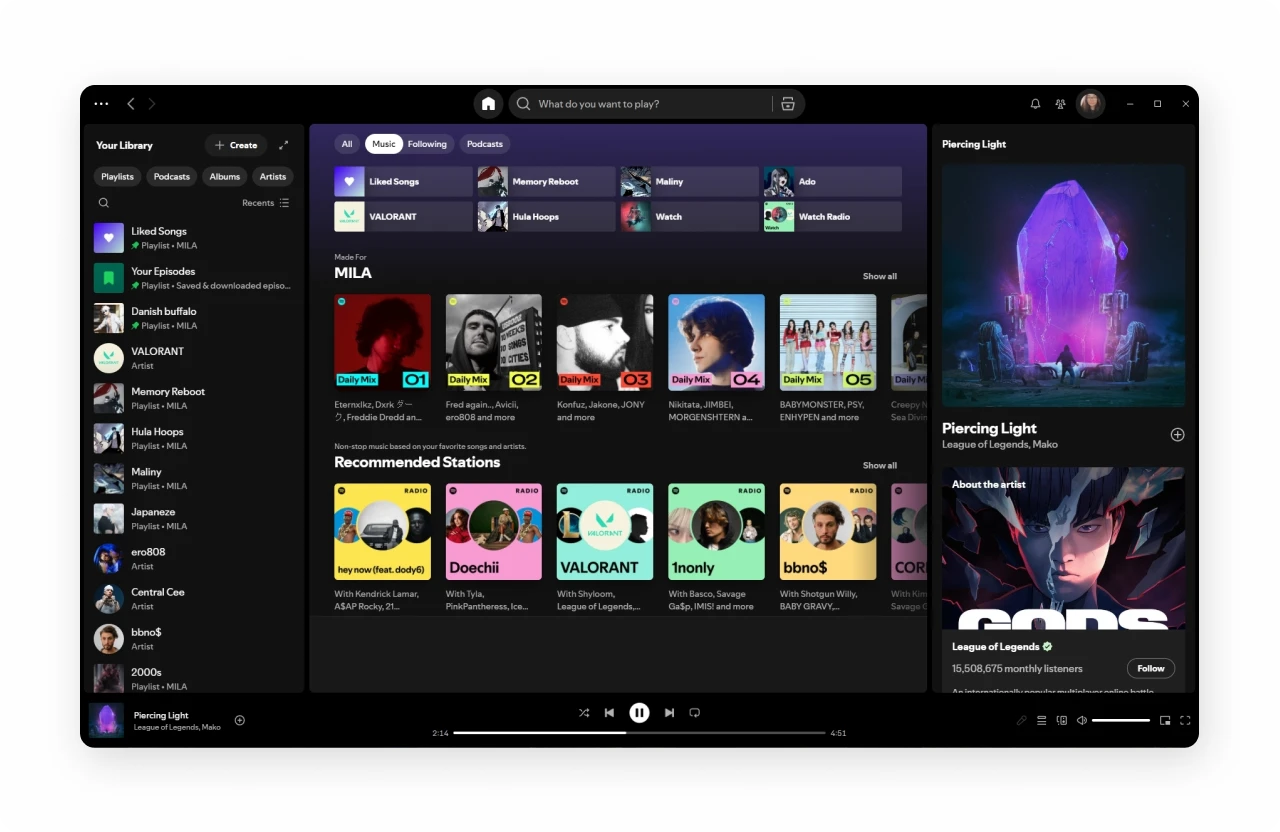
Users can feel the difference between Spotify’s Discover Weekly generated from two weeks of listening history and one built from several months.
The mechanic works on two levels.
- At the individual level - every song you skip, every song you replay, every playlist you build is a signal.
After enough use, the model built from your behavior becomes specific enough to surface music you’ve never heard that you’ll like.
- At the collective level - Spotify has hundreds of millions of users generating listening data simultaneously. When a new artist gets traction in a small segment of users with similar taste profiles to yours, Spotify can surface it to you before it becomes mainstream.
Switching away from Spotify means starting that model over.
Curated results
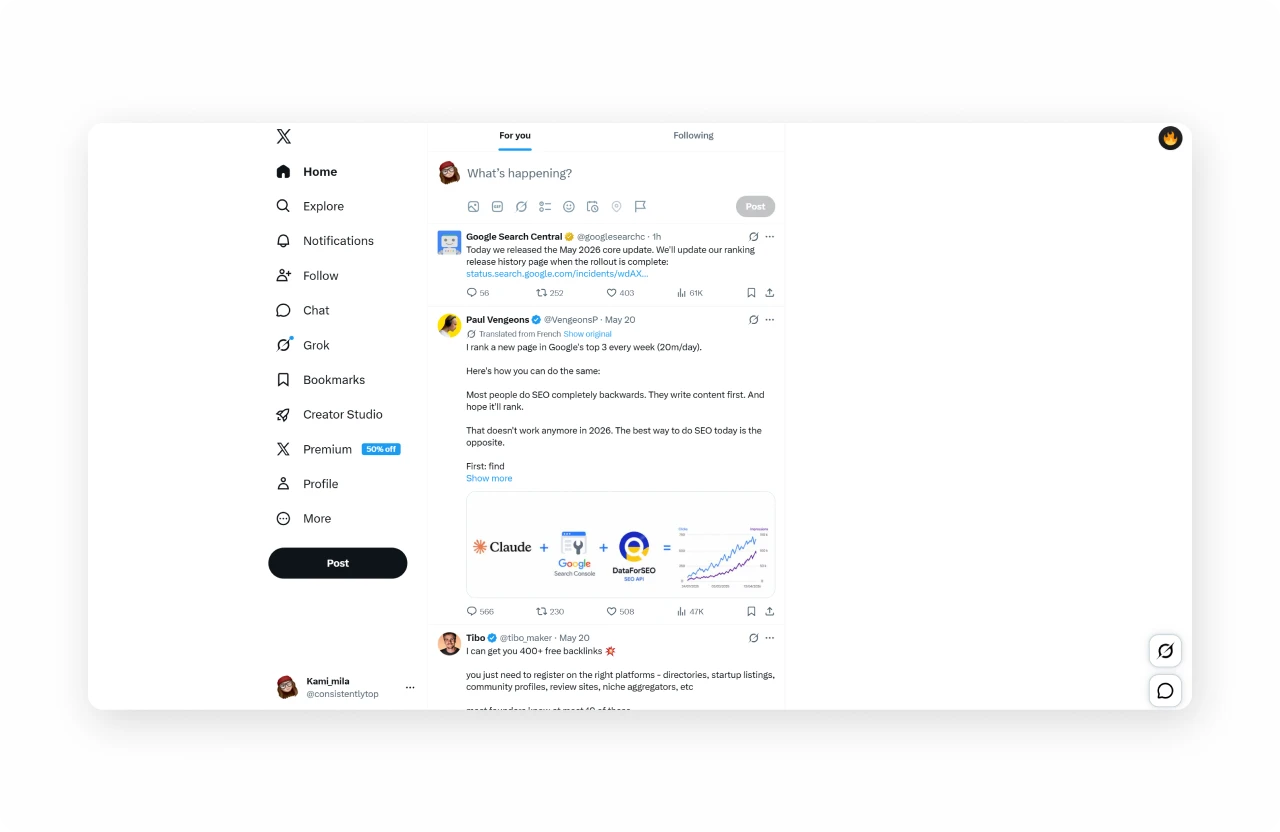
A fresh account on X gets a generic, noisy timeline. An account with even a week of daily interaction gets a feed calibrated to a specific set of interests. The difference is obvious enough that users who’ve been on the platform for years describe their timeline as something they’ve built.
What makes it stickier than Spotify’s version is that Spotify serves you when you decide to listen to music. X serves you information you didn’t know to look for, in real time. The algorithm learns what news, conversations, and topics matter to you specifically, and surfaces them before you know they’re relevant.
Missing a day means missing things your feed would have caught. That urgency doesn’t exist with a music recommendation, but it does with a curated information source. Power users build lists to track specific topics and communities, which deepens the calibration further and makes X their primary real-time news layer.
3. Monetization loop
Most pricing models are designed to extract revenue at the moment of highest willingness to pay. The monetization loop designs mechanics in your pricing to create a behavior that keeps users engaged and ideally generates more.
The implementation usually involves one of a few approaches:
- Credits that create daily return habits
- Usage-based pricing that improves the product as volume grows
- A tiered structure where the free experience creates a clear reason to upgrade at a specific moment
If nothing in your pricing model is designed to address churn at the specific moments it happens, your monetization is probably working against your retention loop.
Pricing at the exit moment
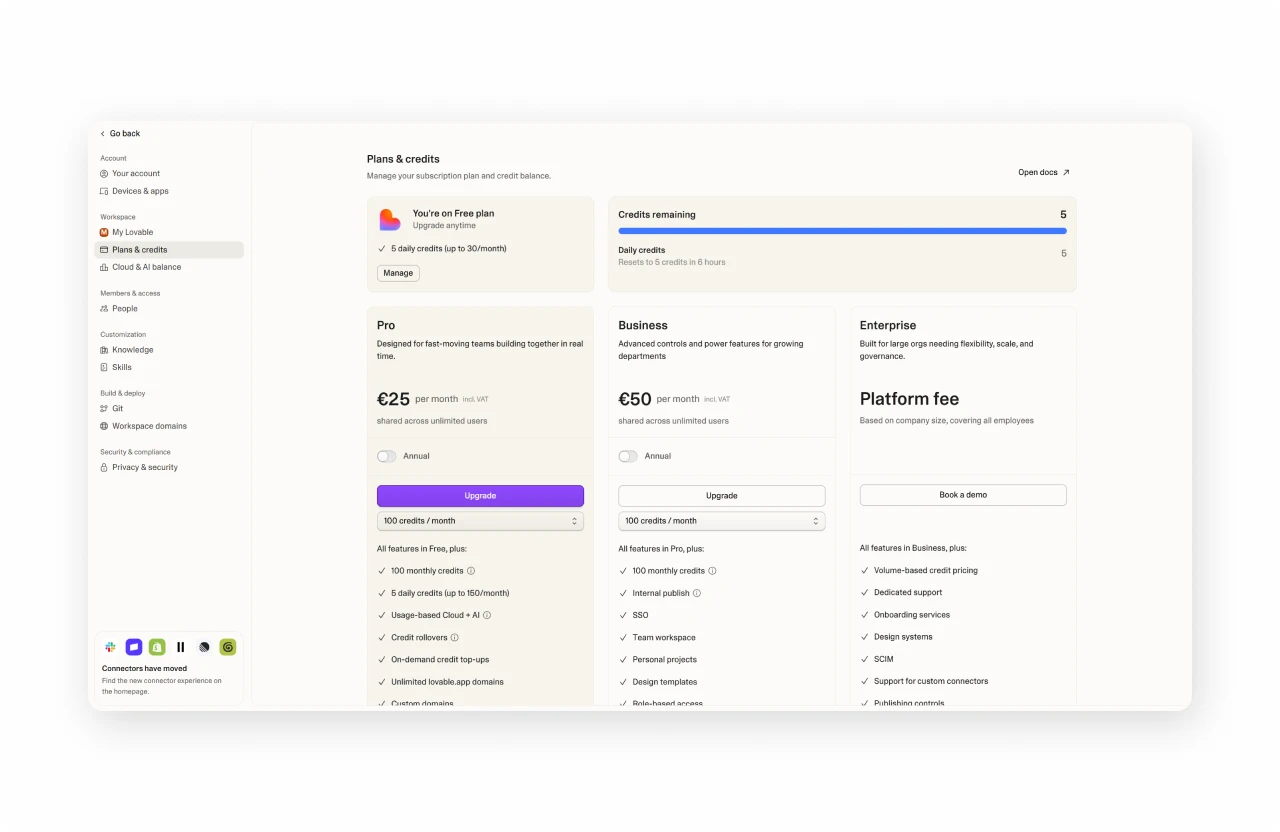
Lovable’s credit system (five free daily credits) was created to form a return habit. The cadence is daily, so the trigger is daily. Credits roll over, which means a user who misses a few days keeps the balance, and the unused credits can feel like lost value, which is a reason to come back rather than churn. The rollover mechanic turns missed days into future sessions rather than letting them become a reason to disengage.
Top-up purchases solved a problem the subscription model couldn’t (a bursty usage). Some users needed 20 credits in a single day, then nothing for a week.
A monthly subscription doesn’t fit that pattern, and so they’d cancel.
Top-ups let those users stay active without the pressure of a recurring commitment.
The $5 lite plan addressed a different exit point: users about to cancel entirely because they’d finished a project and didn’t have an active one. A price point low enough not to justify the effort of cancelling.
Each mechanic addressed a specific moment in the user journey where someone would otherwise leave.
The question Lovable asked about every pricing decision: at the moment a user churns, what could have kept them?
The inverse of that is catching users at peak value rather than at exit. Definitely recommend Elena’s article for a deep dive.
The question Lovable asked about every pricing decision: at the moment a user churns, what could have kept them?
The inverse of that is catching users at peak value rather than at exit.
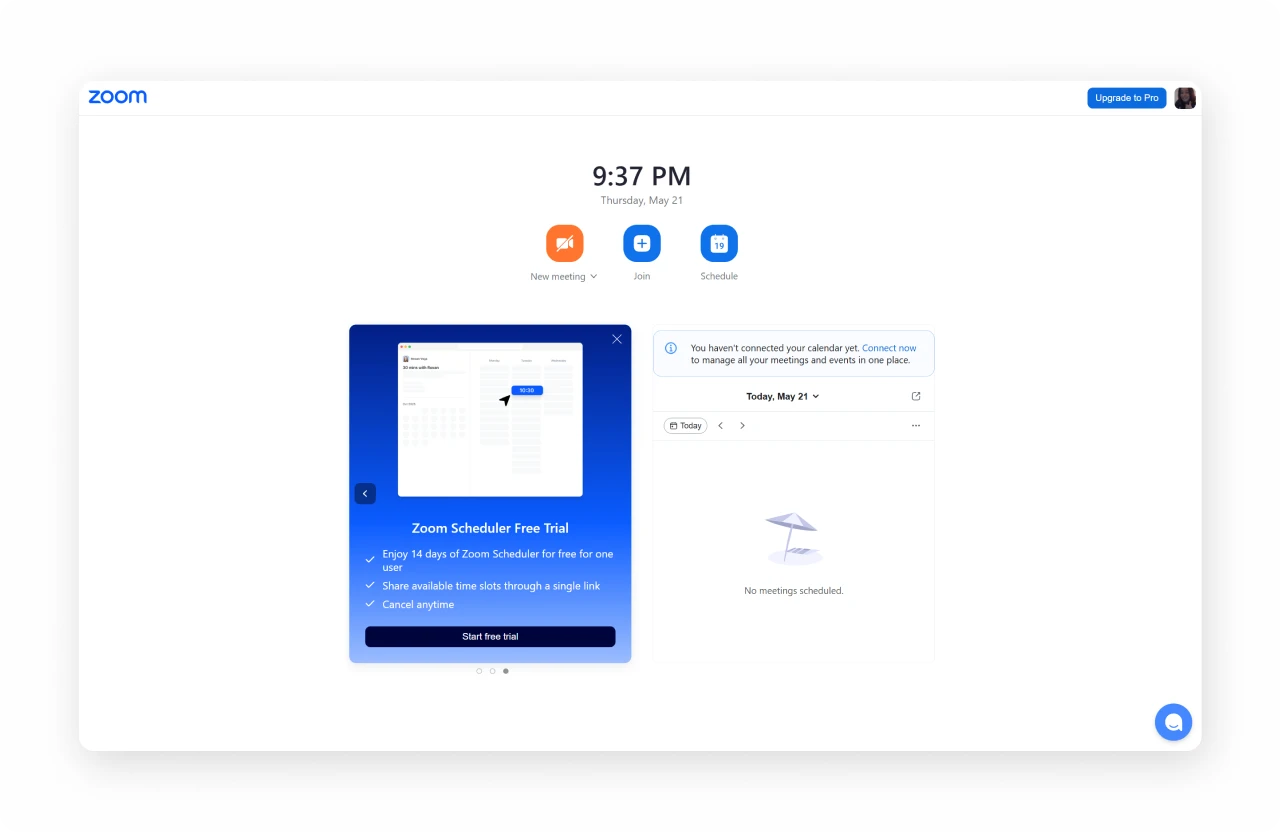
Zoom surfaces upgrade offers the moment a meeting or webinar ends: a discount on Workplace Pro, a free trial of Zoom Scheduler. After the user successfully hosted a call, the product worked, and confidence in it is at its highest. Willingness to pay peaks right there.
The timing difference is the design choice: Lovable asks “when would this user leave?” and intervenes there, while Zoom asks “when did this user just experience maximum value?”. Both are correct answers to the same underlying question: at which specific moment in the user journey is the conversion ask most likely to land?
Registration perks
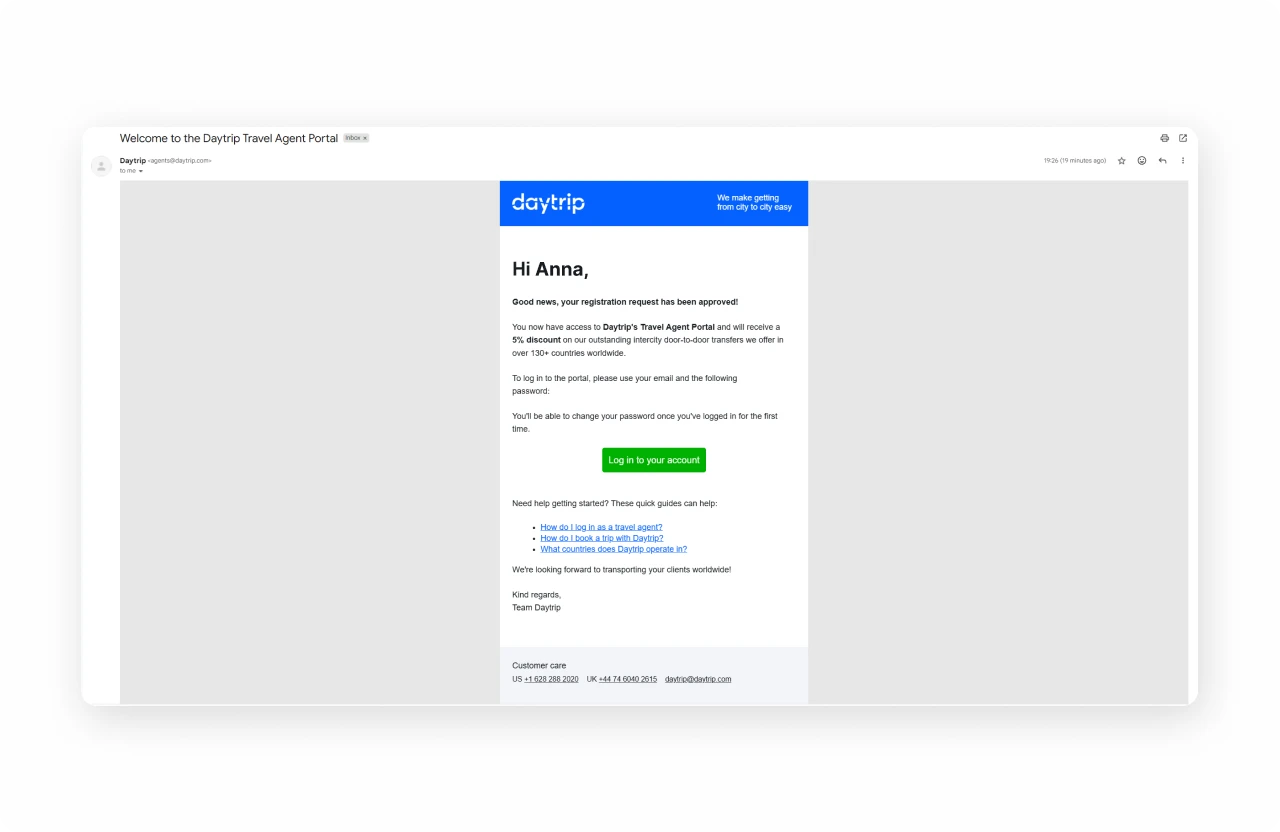
Daytrip’s travel agent program is built around a pricing structure that makes registering in the platform a financially rational default for every booking. Agents get a 5% discount on all routes, which means every trip the agent routes through Daytrip is more profitable than routing it through an alternative.
The loop runs on volume. The more clients an agent serves through Daytrip, the more their income grows, and the more their workflow becomes built around Daytrip’s platform. Clients who have good experiences repeat, which gives the agent more volume to book, which deepens the dependency.
Switching to a competitor means giving up the pricing structure and the accumulated client relationships tied to it. Agents who have built a meaningful share of their income on Daytrip bookings have a strong financial reason not to.
The acquisition side closes through the agent community. Travel agents talk to other travel agents. An agent earning $20 per trip on a reliable platform with 50,000+ routes has a clear answer when a peer asks how they handle ground transportation. The pricing advantage is specific enough to be worth sharing, which brings new agents in with the same incentive, and the loop restarts.
So, how many loops do you need?
Most products have multiple loops. The question is how many are actually spinning fast enough to compound.
The trap is drawing five loops on a whiteboard and assuming they add up to a flywheel. Five slow loops don’t compound the way one fast loop compounds. You end up splitting attention across multiple weak systems instead of investing deeply in one.
Lovable’s flywheel is a good model for what it looks like when loops actually reinforce each other. Their growth lead described it directly:
Ship fast → build in public → community → empathy → social sharing → give product away → more usage → ship fast
The shipping velocity creates the content for build-in-public.
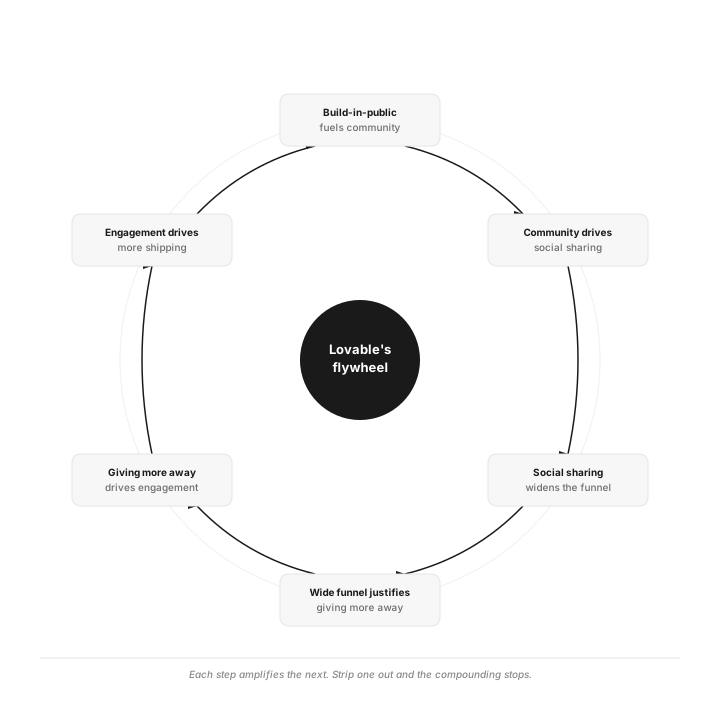
It’s a great example of one system, not six separate tactics.
The fastest-growing products didn't discover a new channel. They found the loop that was already latent in how their product created value, made it explicit, and invested in steps to boost how the output got reinvested as an input.