
Topic Cluster Generator
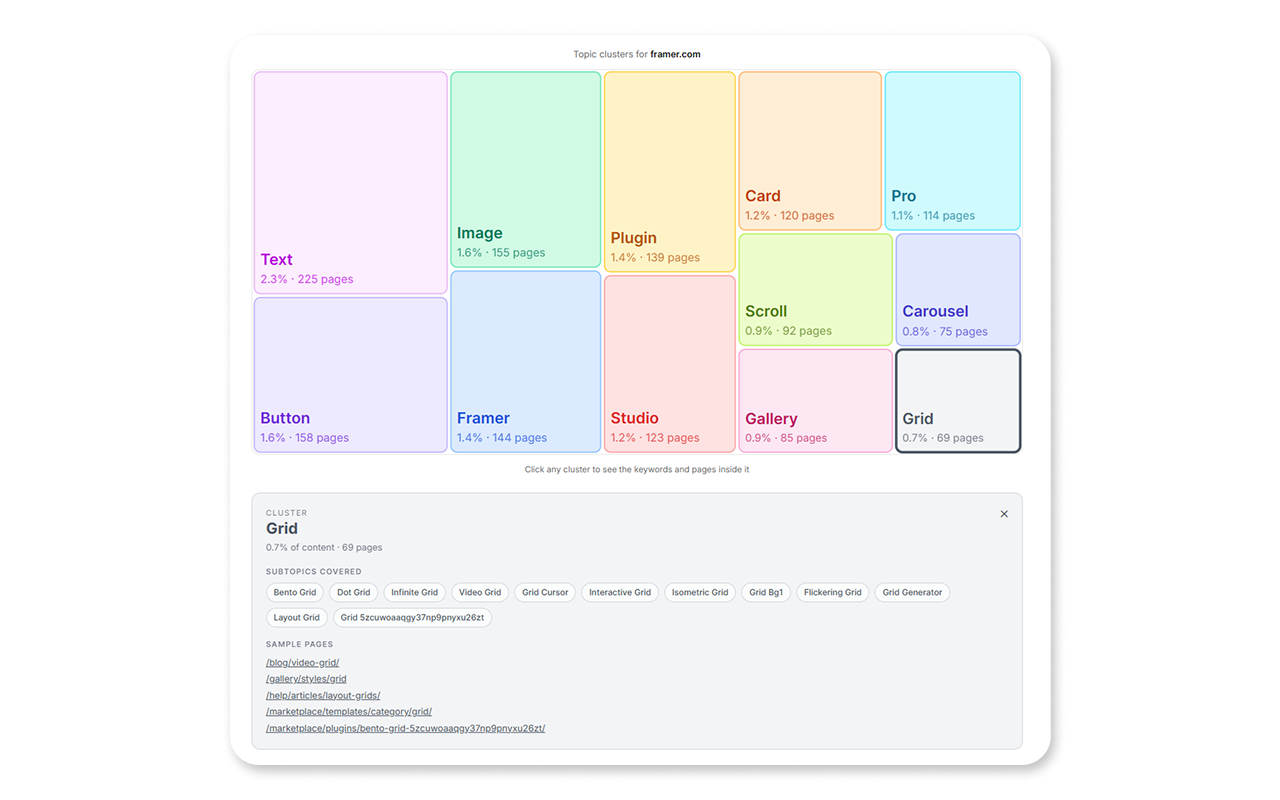
Free Web ToolPaste your sitemap and get a visual treemap of every topic your site covers. Measure topical authority, spot content gaps, and find unrelated pages hurting your SEO — no signup, no API keys.
Try it — paste your sitemap URL.
ContentLeversTopicBot gives you the full picture.What is a topic cluster?
A topic cluster is a group of pages that all cover different angles of the same subject, linked to a central pillar page.
Google doesn't rank pages in isolation anymore. It evaluates whether your whole site demonstrates comprehensive coverage of a topic. The denser your cluster, the more Google trusts you as an authority.
This tool shows you clusters that already exist on your site. Unlike a topical map (a plan you make before writing), a cluster analysis mirrors what your site is actually about today.
How the topic cluster tool works.
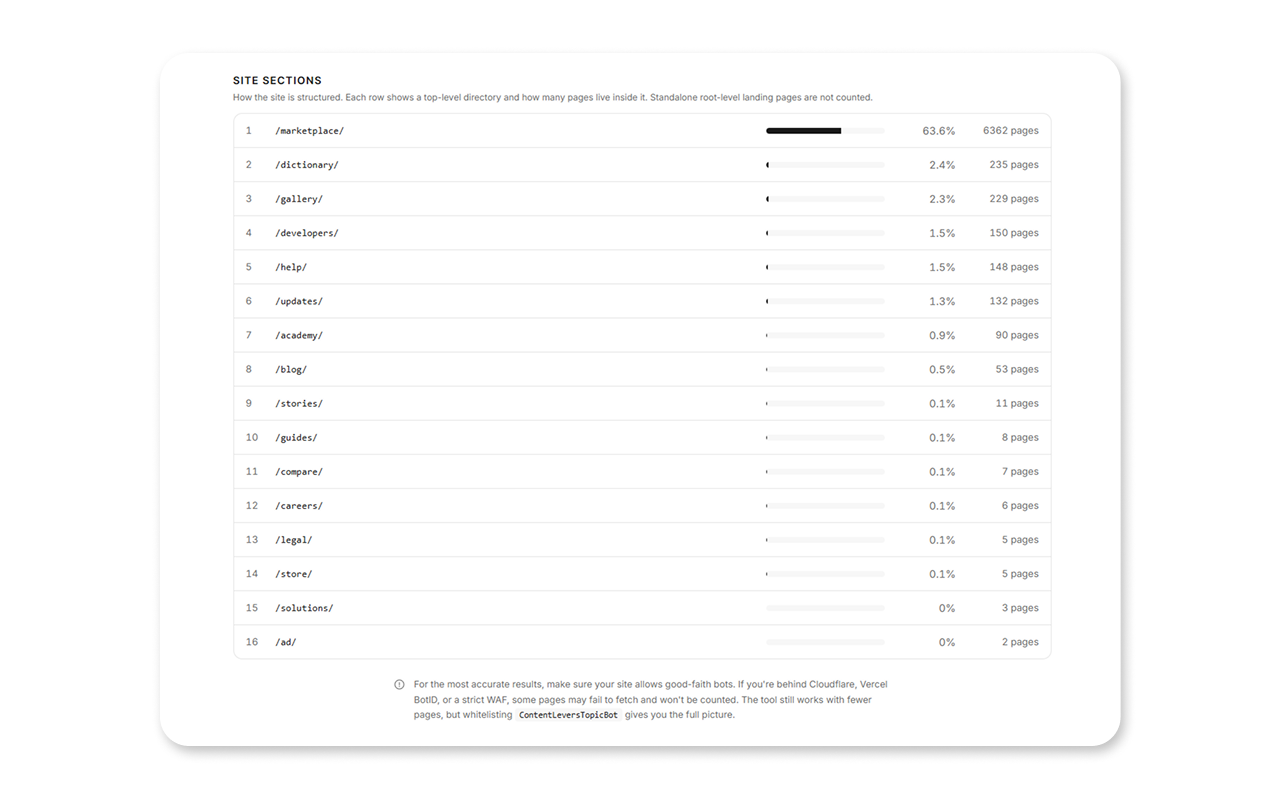
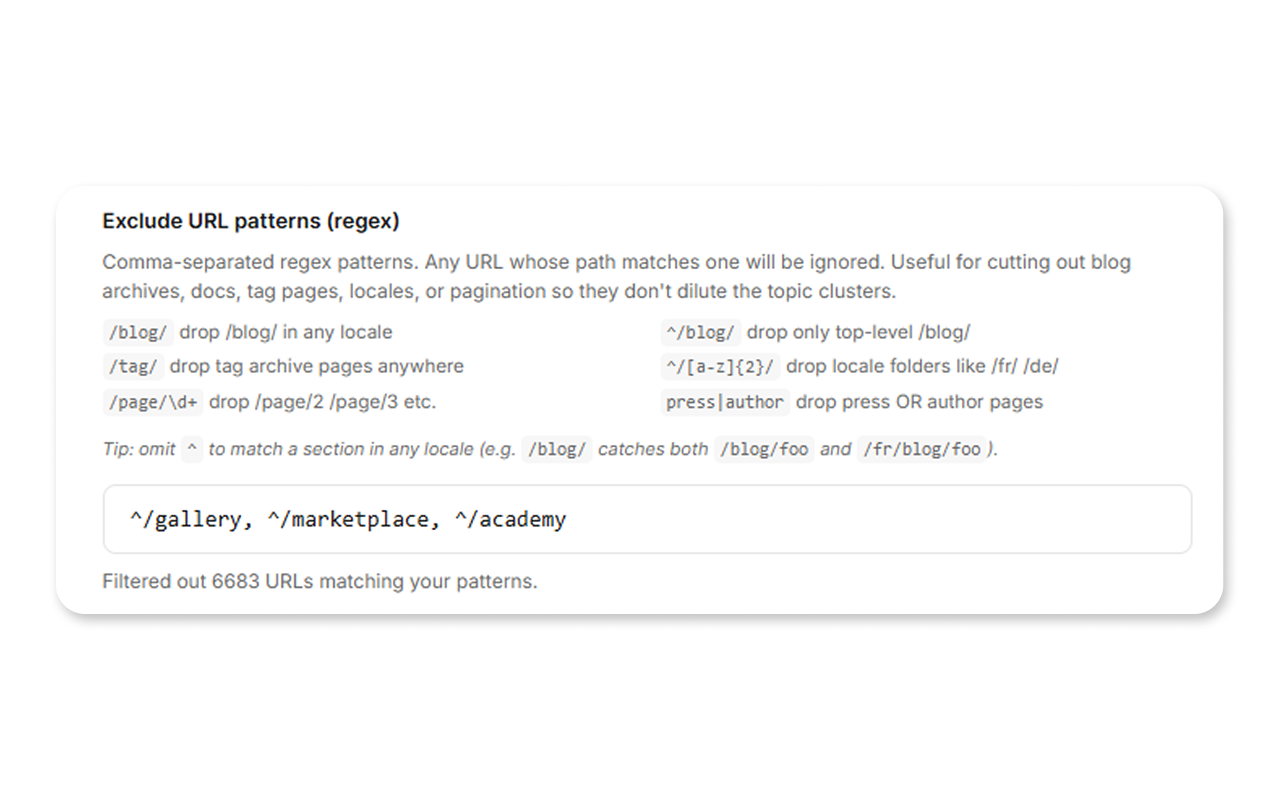
sitemap.xml automatically, nested indexes included.^/blog/ to drop entire site sections that dilute your topical focus, then re-cluster instantly.Focused beats scattered, every time.
Google ranks sites it trusts on a topic. If your content is spread thin across unrelated subjects, Google can't tell what you're an authority on, and neither can LLMs like ChatGPT, Perplexity, or Claude when they decide who to cite.
In my experience, a site with 80% of its content clustered around its money topic will almost always outrank a site where that topic is just 15%, even if the second site has more total pages.
When to use this tool.
This tool is free and constantly evolving. If something looks off, send me a DM on LinkedIn.
Frequently asked questions.
What is a topic cluster?+
A topic cluster is a group of related pages on your website that all cover different angles of the same subject. In modern SEO, topic clusters help search engines understand what your site is an authority on. Instead of looking at individual keywords, Google evaluates whether you cover a topic comprehensively.
How does this topic cluster generator work?+
You paste the URL of your sitemap.xml. The tool fetches up to 500 pages from your sitemap, extracts the URL slug, title, and meta description from each, and runs keyword frequency + clustering analysis to surface the dominant topics on your site. The result is a visual treemap showing which topics make up the biggest share of your content.
Is this topic cluster tool really free?+
Yes. No signup, no API key, no credit card. It runs entirely on open-source techniques (keyword extraction, stemming, n-gram clustering) so there's no per-use LLM cost to pass on to you.
What is topical authority and why does it matter?+
Topical authority is how much Google trusts your site to be an expert on a given subject. Sites with strong topical authority rank higher because Google sees them as comprehensive sources. If your site covers too many unrelated topics, you dilute that authority signal, which makes it harder to rank for any single topic, and harder for LLMs like ChatGPT to decide when to cite you.
How is a topic cluster different from a topical map?+
A topical map is the upfront plan, a diagram of all the topics and subtopics you want to cover before you write anything. A topic cluster is what actually exists on your site after you've published content. This tool shows you the cluster reality: what your site is actually about, based on the pages that exist today.
Why does my topic cluster contain unrelated keywords?+
Usually it means your site covers too many unrelated subjects. This is one of the most common reasons sites struggle to rank. Google can't tell what you're an authority on. The fix is to either prune unrelated content, move it to a subdomain, or create deeper clusters around your highest-value topics.
How many pages can the tool analyze?+
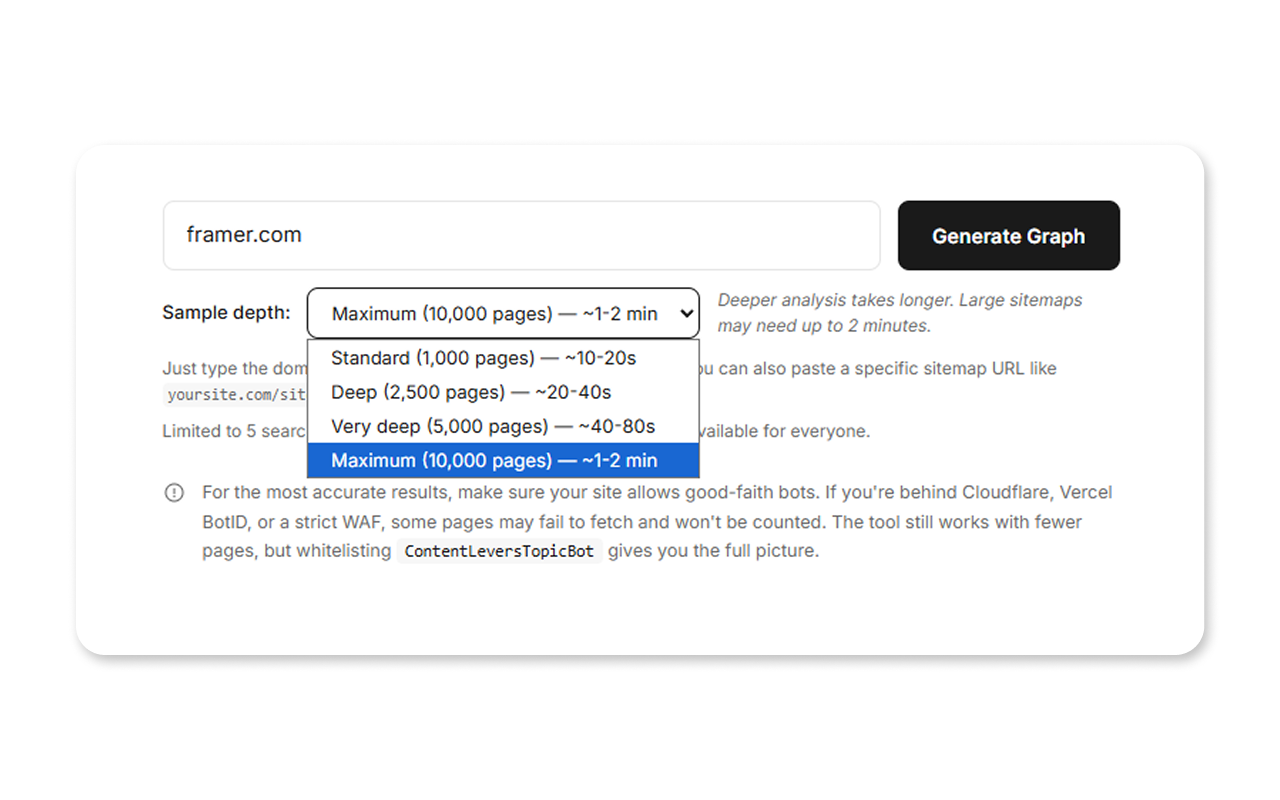
Up to 500 URLs per sitemap. If your sitemap has more, we evenly sample across the list so you still get a representative picture of your whole site. Nested sitemap indexes are supported.
Do I need to enter any API keys?+
No. The tool is 100% free and runs without any third-party AI services or keys. Just paste your sitemap URL and go.