How Better Stack Wins Developers via YouTube: 30 Videos/Month, 139K Subs, 4 People
Right now, every B2B SaaS marketing team I talk to is obsessed with the same question: how do we show up in ChatGPT, Perplexity, Google's AI Overviews, and whatever else Anthropic ships next month. The whole industry is sprinting toward AI search visibility, optimizing pages for LLM citations, instrumenting brand-mention tracking across model outputs.
Better Stack went the other direction. They're going deep on YouTube, building a real audience of working developers who watch the channel weekly. Most of those viewers don't even realize there's a SaaS behind it. And it's quietly working in a way nobody in their category has matched.
The numbers:
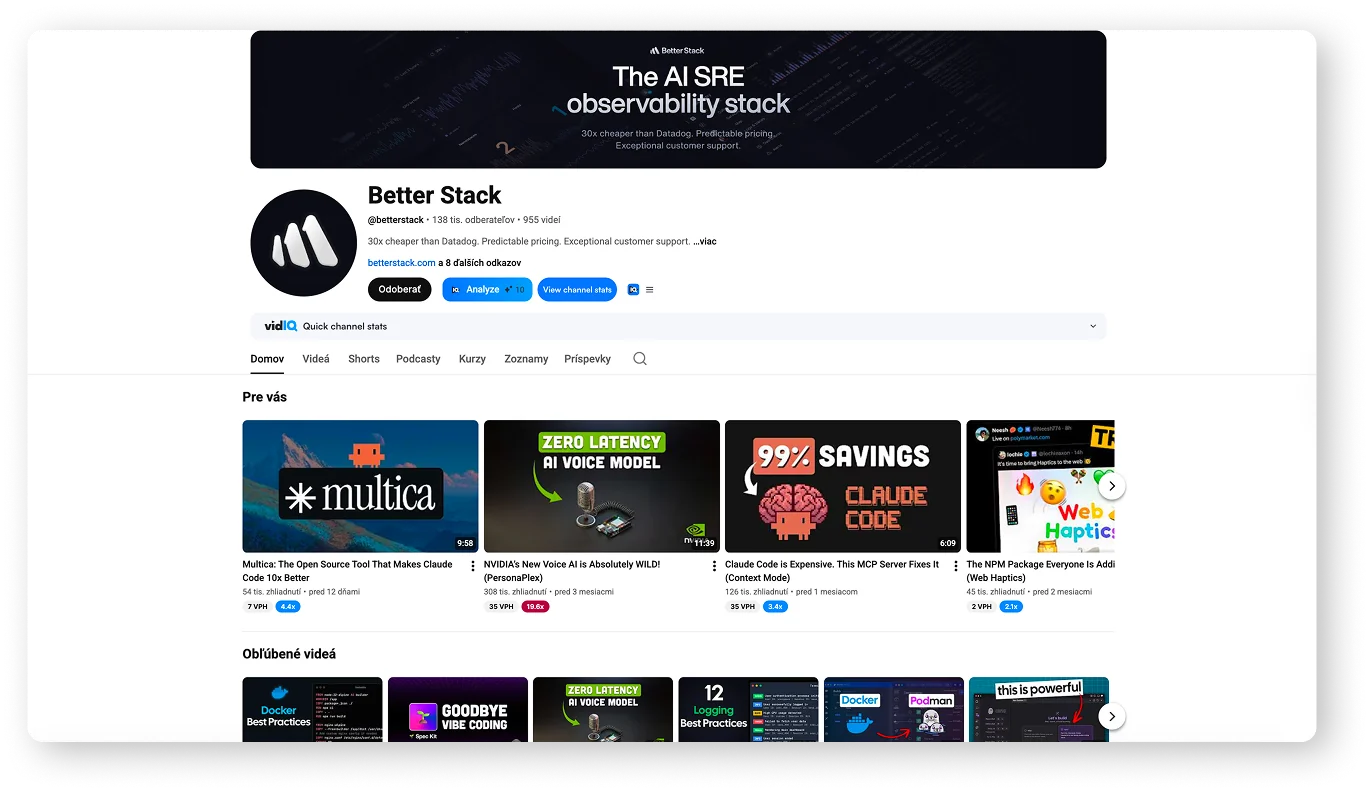
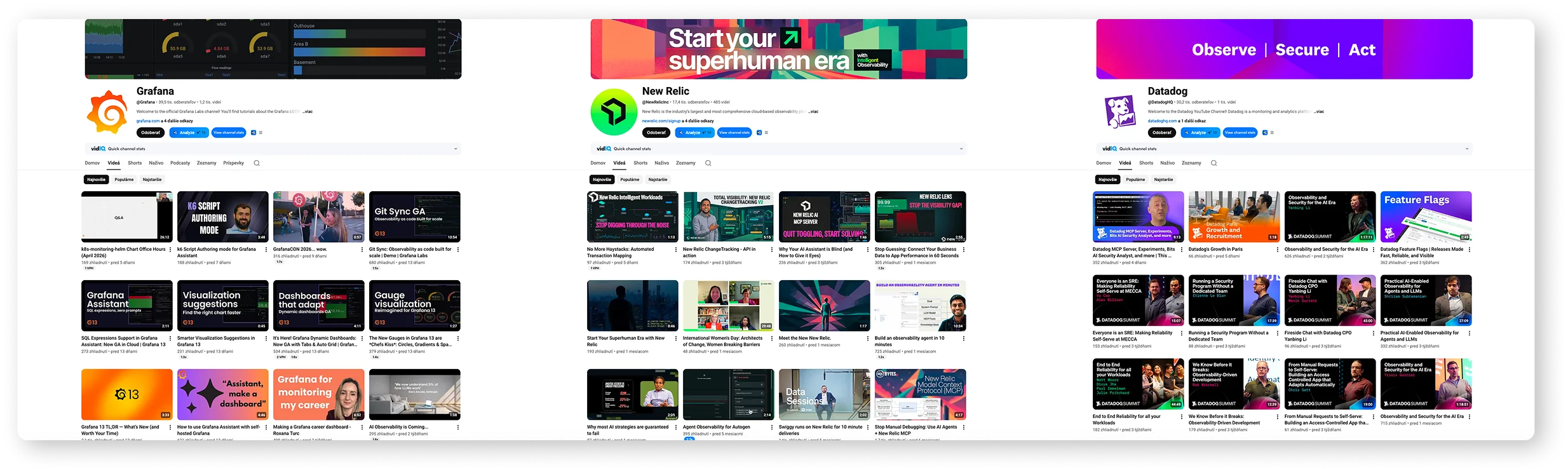
- Datadog, Grafana, and New Relic have a combined 86,900 YouTube subscribers. Better Stack alone has 139,000 (they hit the 100k Youtube plaque recently)
- YouTube accounts for 55.6% of all social traffic to betterstack.com. Reddit, X, LinkedIn, and the rest combined deliver less than what YouTube alone
- Better Stack publishes about 30 videos a month, every month, like clockwork. The competitors don't.
So the moat is three things stacked:
- A 2 to 6x volume advantage in any given month
- A consistent publishing rhythm the competitors don't have
- A format their viewers watch
The other thing worth knowing up front: this is being made by four people. Not a forty-person content team. I had the pleasure to talk with their YouTuber Richard, who took me through the fog of mystery seemingly eloping Youtube.
I pulled the full video archive of all four channels, mapped the publishing cadence and view performance, traced their content evolution from their oldest videos to today, and talked to Richard about how the team operates day to day, and what their secrets to great content are.
Let's look at the numbers first.
The scoreboard
Search YouTube for "observability" or "OpenTelemetry" and you'll mostly find solo creators, the IBM content machine we broke down before, and Better Stack. Which begs the obvious question: what are Better Stack's actual competitors doing on the channel? And frankly, the answer is grim.
| Channel | Subscribers | Lifetime videos | Last 3 months (oldest → newest) | Best recent view |
|---|---|---|---|---|
| Better Stack | 139,000 | 938 | ~30 / ~30 / ~30 (consistent) | 200K+ |
| Grafana | 39,400 | 1,200 | 7 / 18 / 7 (spikes around launches) | 2,400 |
| Datadog | 30,100 | 1,000 | 4 / 5 / 16 (spikes around Summit) | 3,600 |
| New Relic | 17,400 | 487 | 0 / 0 / 5 (mostly silent) | 1,700 |
Pause on those numbers for a second.
Datadog publishes a 45-minute fireside chat with their CPO and gets 92 views.
The same week, Better Stack publishes "Microsoft Just Solved Document Ingestion for AI Devs" and gets 38,000 views in five days.
New Relic's official rebrand video, "Meet the New New Relic," got 231 views. Their International Women's Day video got 48.
Forty-eight views. From a public observability company.
Meanwhile, Better Stack’s “Kimi K2.6 vs Claude Code” sits at 42k views 9 days after publishing, with 463 views per hour velocity in the first day.
Datadog, Grafana, and New Relic optimize for the top of the org chart (fireside chats, the customer testimonials, the executive panels at industry conferences) none of these are made for the engineer who'll use the tool day to day. They're made for the CTO, IT director, or procurement lead who signs the contract and needs to justify the decision internally.
Better Stack aimed lower. The channel speaks to developers and tech enthusiasts, people who don't necessarily sign contracts themselves but heavily influence what their team picks. There's a third audience Better Stack reaches that the competitors don't touch at all: developers who aren't in-market for observability today but might be in two years, and who'll remember the channel that taught them about Claude Code or how to escape overpriced solutions.
The dollar comparison isn't public, so I can't tell you which strategy actually makes more money. But we can talk about the strategic difference.
One team is building a media property where every video compounds. Each upload adds to a back catalog that keeps surfacing in search and recommendations for years. Each subscriber is a developer who explicitly opted in to receive the next video. And every view is captured at the exact moment that developer is researching tools, comparing options, or trying to decide what to switch to. That's high-intent attention stacking on top of itself month after month.
The other team is filling a sales-collateral library that happens to live on YouTube. Each video is a one-off asset. Subscribers don't accumulate because nobody subscribes for the next executive panel. The audience never compounds because the format doesn't reward returning viewers. Those aren't the same channel even though they look the same on the surface.
What we can say is that one produces a 139,000-strong audience of engaged developers who watch every week. The other produces 92-view fireside chats. And starting from "we have a real audience" is a much better problem to have than starting from "nobody watches our channel."
How Better Stack pivoted their YouTube channel
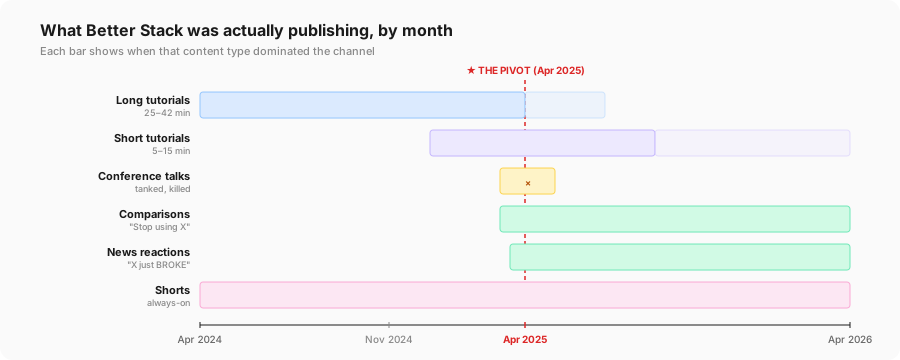
Better Stack's channel wasn't always like this. Their oldest videos, from two years ago, are 25 to 42 minute deep-dive tutorials on logging in Django, Pino, Go's slog package, FastAPI, Loguru, PHP Monolog, Laravel scheduled tasks, fluentd, and Rsyslog.
That's a textbook B2B SaaS playbook for the era it was made in: teach your target customer about the topic your product solves, build credibility through depth, and earn organic search traffic over time. It worked. Several of those tutorials still pull steady views today and they laid the foundation for everything that came next.
But the era changed, and Richard called this out directly when we talked. Basic tutorials don't perform on YouTube the way they used to. AI assistants like ChatGPT and Claude now answer those exact questions interactively, against the user's actual code, in real time. A 30-minute Python logging tutorial cannot compete with an AI that walks you through your specific broken function. Several established programming-tutorial channels have watched their views erode over the last year for exactly this reason.
There are 3 moments in time Better Stack went through a change.
Act 1: Long-form tutorials (2-1 years ago)
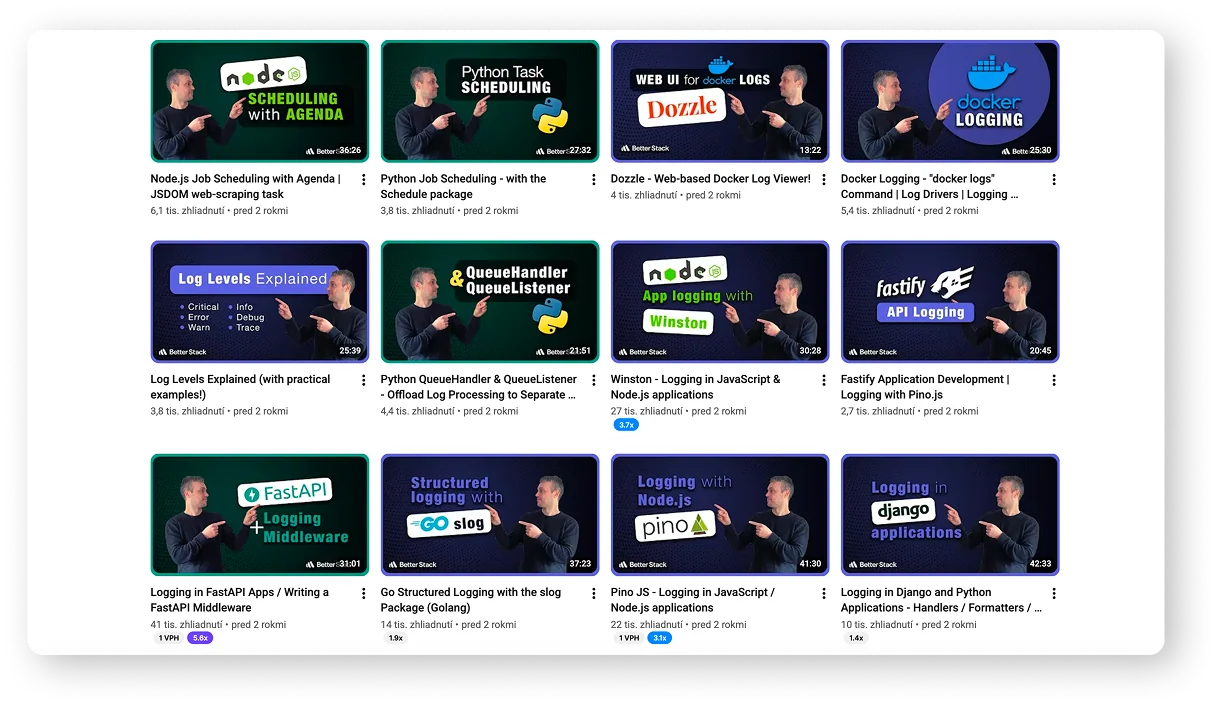
Every video was 20+ minutes (How to build HackerNews was 10h), narrated calmly, focused on a single or multiple tools to help you learn. Views ranged from 500 to 51,000 depending on the video. The format built credibility, and the channel grew slowly.
| Sample video | Length | Views |
|---|---|---|
| Logging in Django and Python Applications | 42:33 | 10,000 |
| Pino JS - Logging in JavaScript / Node.js applications | 41:30 | 22,000 |
| Logging in FastAPI Apps | 31:01 | 41,000 |
| Loguru - Simplified Python Logging | 28:56 | 15,000 |
| fluentd Data Collector | 24:34 | 4,300 |
Act 2: Running experiments (around 1 year ago)
This is around when James joined Richard on the channel. With two creators instead of one, the cadence picked up and so did the format experiments. The 30-minute deep dives compressed into 5 to 15 minute packages. The first "vs" comparisons showed up. Longer project build-alongs broke out of pure observability into general dev education. And the team also tested bottom-funnel product-education content, the kind of "how to use our tool" videos most channels start with. The hits started landing.
| Sample video | Length | Views |
|---|---|---|
| Docker Image BEST Practices - From 1.2GB to 10MB | 7:15 | 414,000 |
| 12 Logging BEST Practices in 12 minutes | 12:00 | 256,000 |
| Podman vs Docker in 2026 | 6:15 | 196,000 |
| Roo Code is AMAZING - AI VSCode Extension | 12:07 | 145,000 |
| These Hidden Cursor Features Will Make You 10x More Productive | 10:28 | 130,000 |
| Build a HackerNews Clone: Hono, Tanstack Router, Drizzle, React Query, Lucia & more | long | 51,000 |
| Windsurf vs Cursor: The AI IDE Battle | 11:41 | 22,000 |
| Add an Uptime Badge to ANY Website | short | 3,700 |
Four patterns emerged. Best-practice tutorials still drove the biggest hits. The "compare two tools" format kicked off here, with Windsurf vs Cursor (22K views) as one of the earliest "vs" entries: it proved the format could land, and Podman vs Docker, Roo Code vs Cursor, and Bun vs Deno followed. Longer project build-alongs, like the HackerNews Clone, stretched the channel's surface area beyond observability into general dev education. And the team also tested bottom-funnel product education: "Add an Uptime Badge to ANY Website," a how-to-use-Better-Stack tutorial, got 3,700 views. The same low ceiling that changelogs would later land in. That experiment quietly answered what direct-product content could pull on the channel.
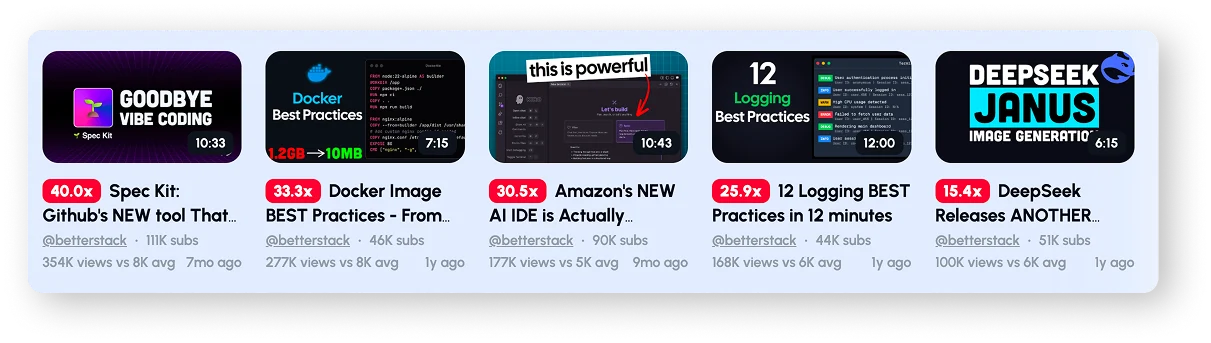
The Docker Image Best Practices video, published a year ago, is still their #1 of all time at 414,000 views. The tutorials still pay rent.
And it's not a one-off. Richard and the team treats almost everything on the channel as a continuous experiment. The conference talks weren't a single misstep to learn from. They were one data point in a measurement loop the team runs every week, where formats that don't move views get dropped without ceremony. The mechanics of how that loop actually runs (weekly retros, A/B testing, the editing cuts that came out of past experiments) are worth their own section. We'll get into them further down. For now, the point is that the killing isn't a one-time decision. It's a habit baked into how the team operates.
Act 3: Full newsroom mode (visible on the channel from ~April 2025)
Richard told me the internal pivot decision happened around November 2024. The content shift on the channel itself followed a few months later — by spring 2025 the format had snapped. Long tutorials stopped. Headlines became urgent. Cadence settled at roughly one upload per day, every day, which is far more than any direct competitor publishes in a steady-state month. The combination of consistent volume and a new format is what made the channel break out.
If the early tutorials were Better Stack's response to "we should teach our customer about logging," the newsroom is their response to "AI now teaches that, what's left for us to make?" The answer they landed on is the one thing AI still can't do well: have a timely, opinionated take on a tool that shipped this week. Numbers below are averages.
| Recent video | Length | Views | VPH |
|---|---|---|---|
| Stop Overpaying for LLMs... This Router Cut My Costs 70% | 6:5 | 10,000 | 70 |
| Kimi K2.6 vs Claude Code: Why I'm Switching to the $39 Plan | 10:22 | 42,000 | 112 |
| The End of .env Files as We Know Them | 8:27 | 40,000 | 30 |
Generally said 100–300+ VPH indicates a video has good momentum. Better Stack hits that range regularly. They're running on a different velocity curve than every competitor in the category.
The five formulas powering the newsroom
Watch enough of these and the underlying rule becomes obvious. Every headline pitches a verdict about someone else's tool. Not a topic, not a tutorial promise, not a neutral framing. A verdict: the old way is broken, something big just shifted, someone migrated and you should too, a tool blew them away, or you're paying too much.
The five shapes below aren't templates the team picks from. They're what naturally emerges when every headline has to land an opinion before the click.
| # | The verdict | Headline pattern | Examples from the channel |
|---|---|---|---|
| 1 | There's a better way to do this now | "Stop Using X, Use This Instead" | • Stop Building Login Systems… Use Authentik • Stop Rebuilding Backends… Just Use Directus • Stop Using Docker for GPUs! (RunPod Flash) |
| 2 | Something big just shifted | "[Big Company] Just BROKE / SOLVED / RELEASED..." | • Microsoft Just Solved Document Ingestion • Anthropic's Latest Move: Why OpenCode Users Are Worried • Google Just Made A HISTORICAL Quantum Breakthrough • Vercel Just DESTROYED Port Numbers Forever |
| 3 | I switched, you should too | "I Replaced X with Y" / "Why I'm Switching" | • I Replaced Vercel with Dokploy • I Replaced Notion, Linear, and Slack With One Tool (Huly) • Headscale Made Me DELETE My Tailscale Subscription |
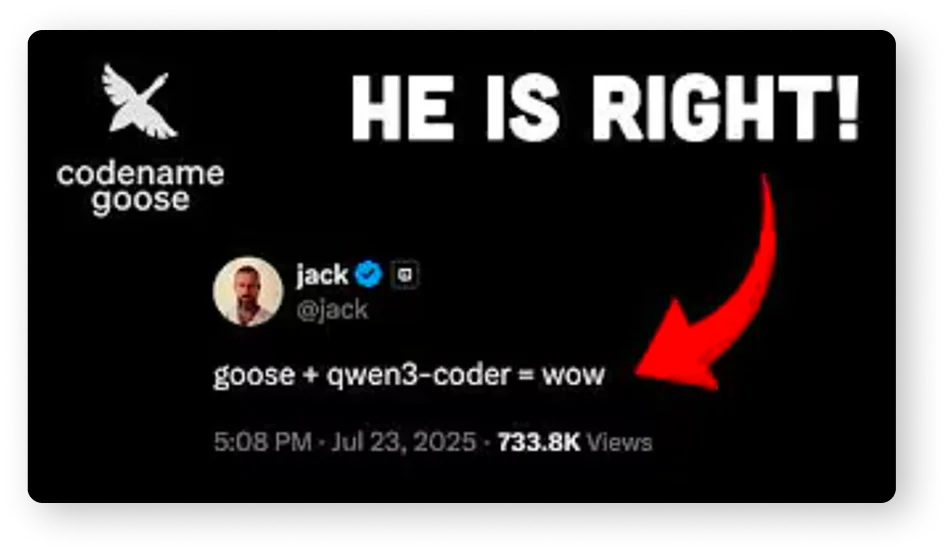
| 4 | This blew me away | "[Tool] is INSANE / WILD / AMAZING" | • NVIDIA's New Voice AI is Absolutely WILD • Roo Code is AMAZING (better than Cursor?) • Goose + Qwen3 Is INSANE |
| 5 | You're overpaying | "I Switched to the $X Plan and Here's Why" | • Kimi K2.6 vs Claude Code: Why I'm Switching to the $39 Plan • Goodbye AI Cloud Bills… Exo Runs AI on Your Own Devices |
Every thumbnail leaks the verdict before you click
Most B2B SaaS channels enforce a house style: same logo placement, same font, same brand colors. Better Stack runs no house style. They run a single rule, and let the visuals follow wherever the rule leads. The thumbnail shows the verdict, not the topic.
Title and thumbnail aren't the same surface saying the same thing twice. The title states what the video is about. The thumbnail states what the video concluded. Read together in the feed, you absorb the verdict first, then check the title to find out what it's a verdict on.
Rather than having a template, they apply a recurring logic. Whatever the outcome, the same logic can be applied:
| Verdict type | Visual signature | Examples |
|---|---|---|
| Replacement | "GOODBYE [tool]" with yellow box, arrow, competitor logo | GOODBYE VERCEL, GOODBYE NOTION, GOODBYE BUBBLE |
| Warning | "STOP [action]" with red X overlay | STOP LOGIN, STOP BUILDING, STOP USING DOCKER |
| Superlative | "BEST [tool]" or "[X] BEATS [Y]" with brand-borrowed logos | BEST AI BROWSER, BETTER THAN CLAUDE?, BEATS CURSOR |
| Evidence | Code snippets, pricing tables, or product UI as proof | The 1.2GB → 10MB Docker thumbnail (canonical) |
When the verdict comes in an unusual shape, the visual breaks the pattern, and that's also the rule working:
- When the subject is a meme tool like Anthropic's Ralph plugin, they swap to a Ralph Wiggum illustration (116K views)
- When Jack Dorsey is the story, his face fills the frame (92K views)
- When Multica's own brand identity is striking, they mimic it directly (50K views)
- When a viral X post is the news, the thumbnail IS the X post with a callout.
By showing a key element and hinting at a transformation, the viewers already arrive curious (am I overpaying? is my stack broken? is there a better tool?) so the thumbnail's job isn't to manufacture intrigue, but to show the video is worth their six minutes.
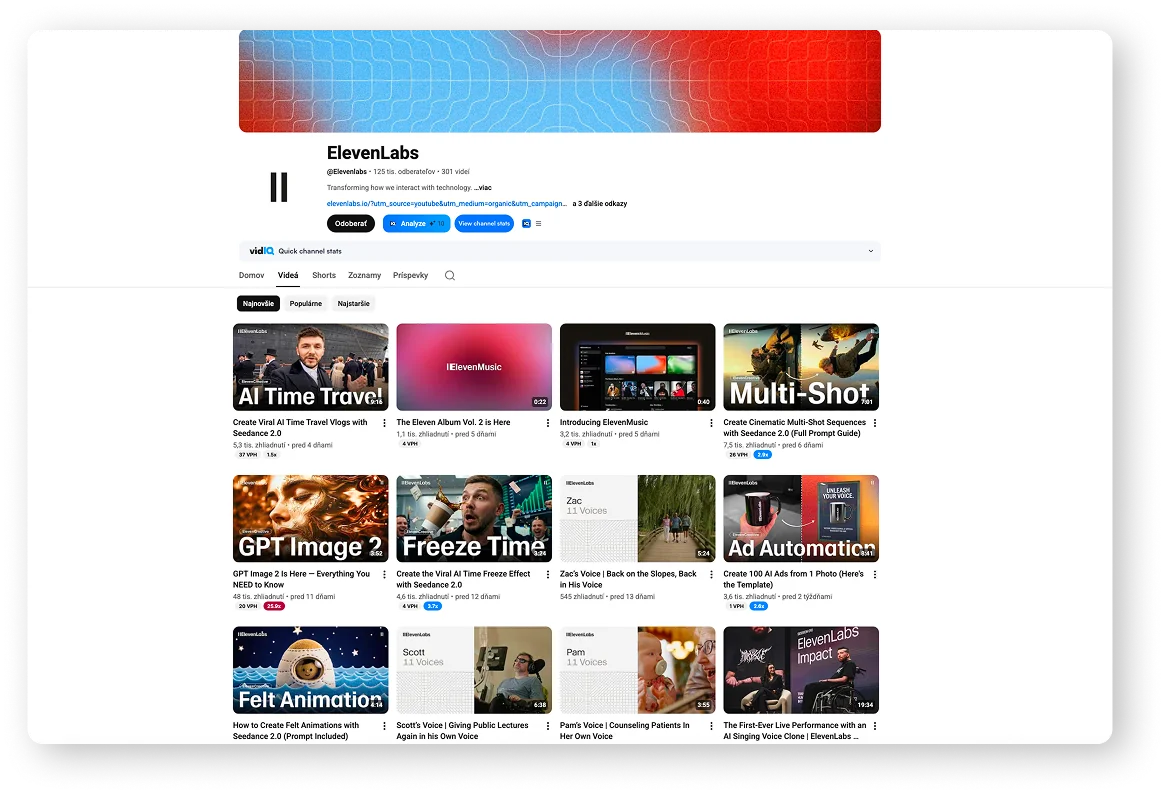
Most marketing teams cannot ship this. Their org chart demands brand consistency, logo on every asset, designers fight for "ownership of brand voice." Better Stack's content team has permission to abandon brand identity in service of clickability and format their audience prefers and consumes, which is a sound strategy that a few other SaaS companies successfully implemented as well (e.g. ElevenLabs).
How many times should you mention your own brand?
Out of 938 videos in the archive, the words "Better Stack" appear in exactly 2 titles. Their podcast series and changelog updates.
Every other video is named after something else. Claude Code. Cursor. Docker. Vercel. Anthropic. Kimi. Tailwind. Bun. Deno. GitHub. Microsoft. NVIDIA. Roblox.
What's interesting is how this happened. It wasn't a top-down brand decision. Richard told me that when he started making videos for Better Stack, he tried to mention the product and mainly cover observability content, which makes sense since it's the category Better Stack competes in.
The videos got few views.
So he ran an experiment where he didn't mention Better Stack and broadened the scope to cover more than just observability.
Those videos got more views and the team doubled down.
The way they surface the brand isn't "mention it in the mid-roll." in every video. When I asked Richard, his answer was that they almost never talk about Better Stack on camera, unless the topic genuinely overlaps (observability, SRE, monitoring) and the reference gets weaved in for a few seconds.
BUT what about the not-scripted exposure?
There are three instances:
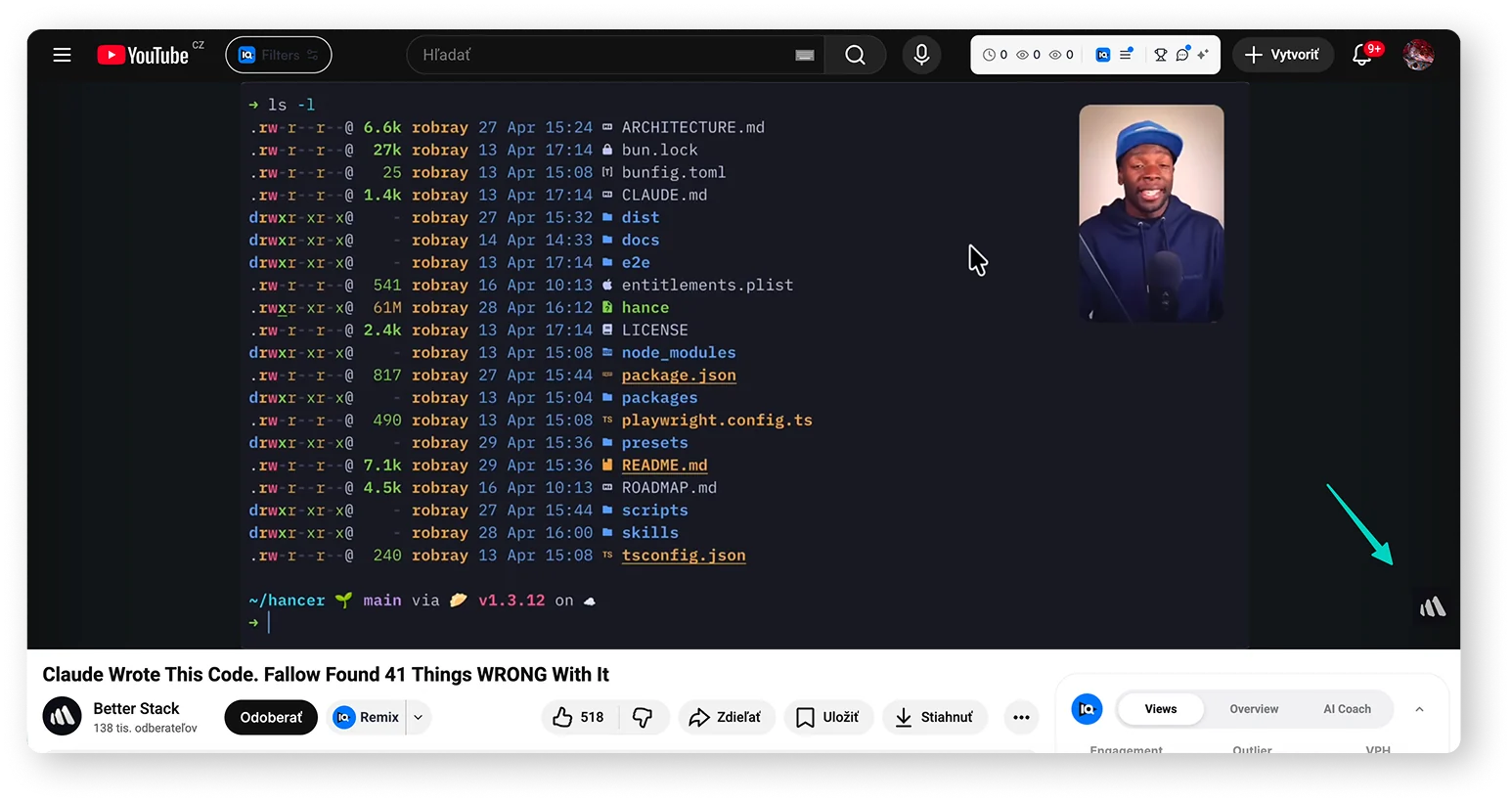
A small Better Stack logo sits in the bottom-right corner the whole time. An overlay you stop noticing after the first second but still process over a 6-minute watch.
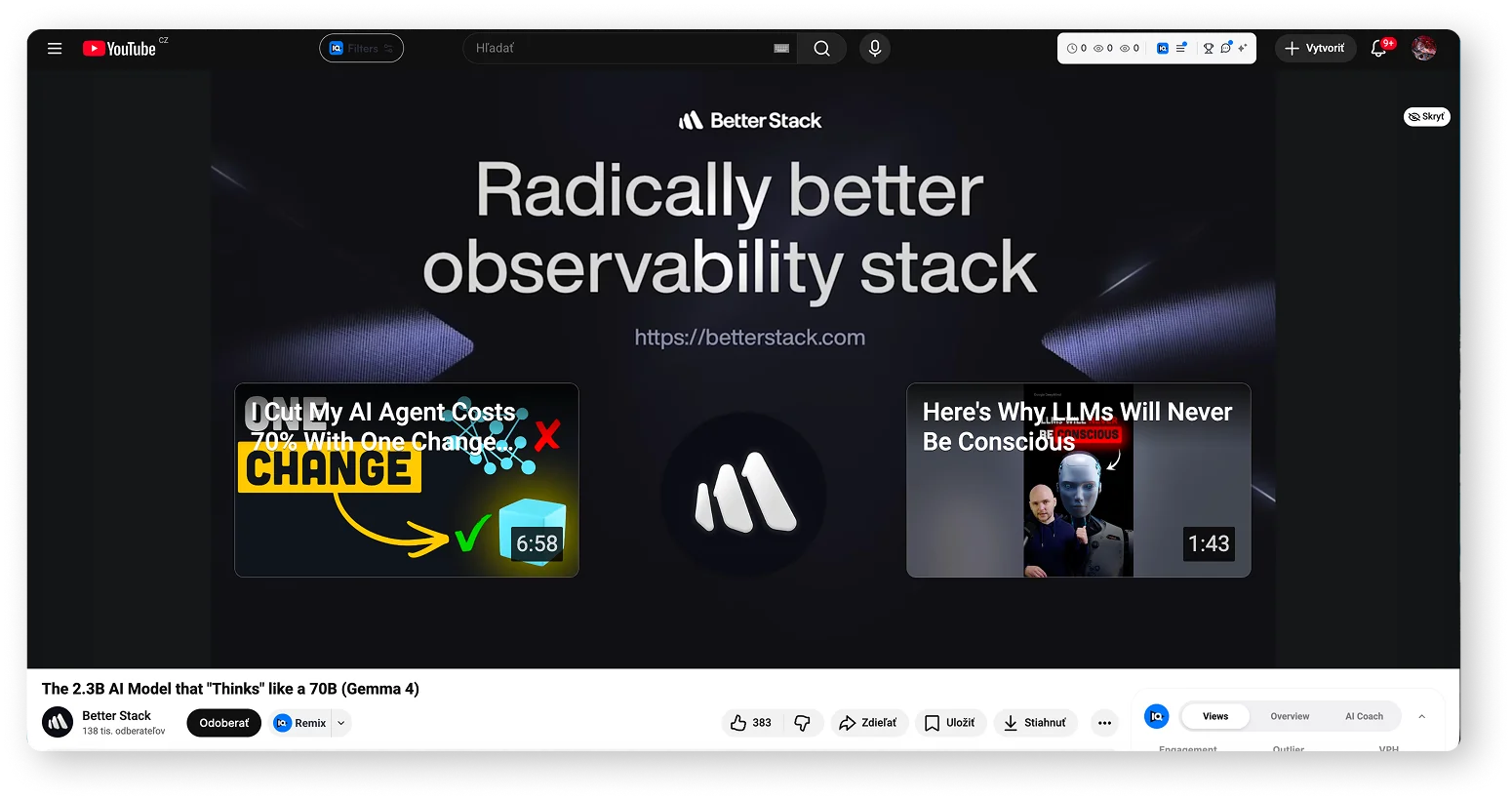
Some videos end with a 5-second branded outro card.
Some videos have a 5-second intro placed in the first 30 seconds.
Notably, the outro + intro isn’t standardized, each creator has a different approach to this and sometimes they don’t include these at all. For example, most (if not all) of James’s videos close with a short branded outro containing logo and the category slogan, but the same rule doesn’t apply for Richard, Andris, or Josh.
Nevertheless, the brand budget per video isn't zero exposure. It's peripheral exposure. Roughly zero on-camera mentions during the body, plus the corner watermark running throughout, plus one short branded card at the end. The viewer arrives for "Microsoft Just Solved Document Ingestion," leaves with two soft impressions they barely registered consciously, and over enough videos those impressions compound into recognition without feeling like marketing.
So, we're not talking about "no brand presence at all," which would forfeit the whole exercise. It's brand presence at deliberate times that don't disrupt the viewer's experience. It's where the viewer's focus stays on the topic and the logo sits in the corner of the eye the way a TV news lower-third does. Even the outro card seems to be loose enough to feel native to the creator instead of imposed by a marketing team.
How to build a Youtube brand that developers love
The news media facet works so well that, according to Richard, most viewers don't realize Better Stack is a SaaS company at all. They think it's an educational channel run by four people who happen to make content about dev tools. The "not a SaaS" part is doing exactly what brand work is supposed to do: lower the perceived sales pressure of the audience while still building affinity for the brand itself.
When I asked Richard why viewers perceive the channel that way, we found 3 things that are doing the work.
- (established) The team almost never talks about Better Stack on camera. The aggressive cues that signal "company channel" (sponsor reads in the body, branded intros that interrupt the topic, customer logos blasted across the screen) just aren't there. The brand presence that does exist (corner watermark, 5-second outro) sits at the periphery, not at the center of the frame.
- The same four faces show up week after week, which builds the kind of parasocial recognition you'd associate with an individual creator, not a brand account where the host rotates with employee turnover.
- The topics they cover are the topics they're personally curious about. Passion shows up on camera. When someone is genuinely interested in the tool they're reviewing, viewers can feel it.
The third point matters most for any company trying to push this strategy. Picking topics by editorial calendar produces visibly different content than picking topics because the creator wants to make the video. Better Stack's flexibility on what gets covered makes the videos feel like media instead of marketing.
What the strategy is doing (and what it isn't)
The honest part, which Richard said outright when I asked: even with 100,000+ subscribers, people know about Better Stack now, but the YouTube subscriber count isn't a direct funnel to the product.
This matters because most B2B marketing leaders, when they see "100K YouTube subscribers" on a slide, will translate that to a pipeline number and ask why their own channel isn't doing the same. That's not what's happening here.
The bet Better Stack is making is on long-term brand recognition, dev mindshare, and being the channel a developer remembers when their team is picking an observability tool. Not on click-through-attribution conversions. If you can't get sign-off for that bet inside your company, this strategy probably won't survive the budget conversation.
The other thing to know is that newsroom content is perishable. Take the NVIDIA Voice AI video. Published three months ago, it pulled 308,000 views, a 19.6x multiplier over channel average. A massive outlier hit. And it's now sitting at 35 VPH. Even the biggest newsroom hits decay.
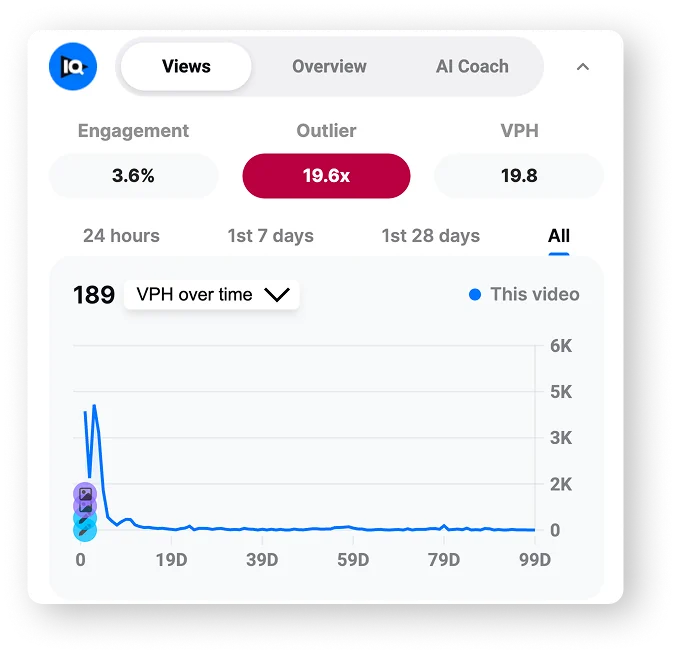
“Kimi K2.6 vs Claude Code” sits at 42k views 9 days after publishing, with 463 views per hour velocity in the first day, but ultimately follows the same curve over time. Meanwhile, the 256,000-view “12 Logging Best Practices” video from a year ago is still pulling traffic. News burns hot, then dies. Tutorials don’t.
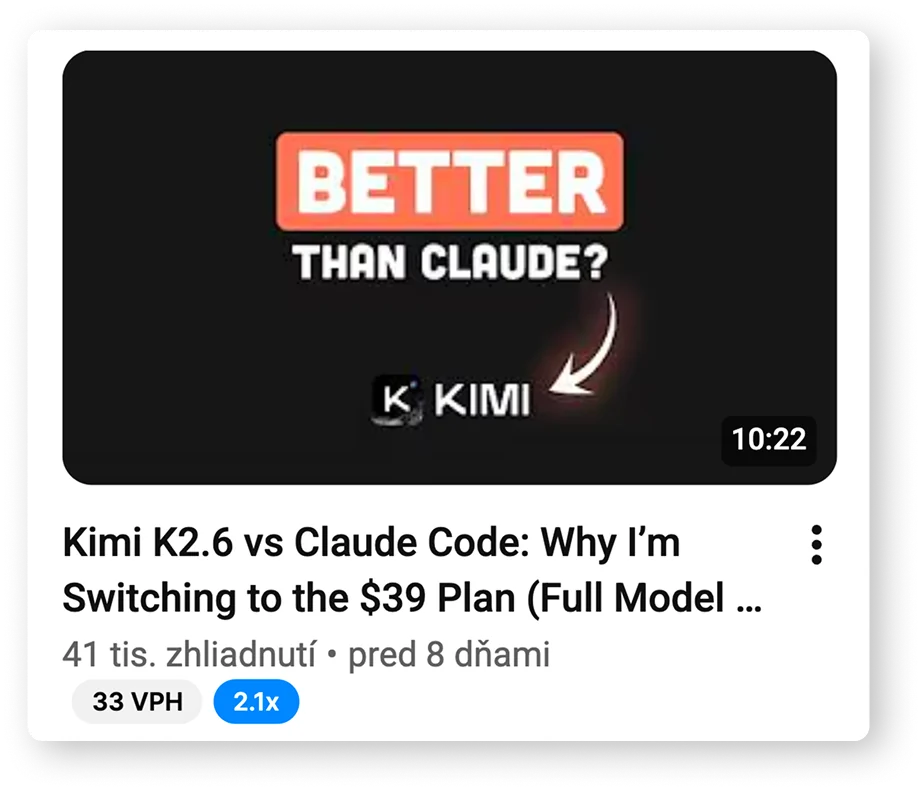
That's why a YouTube channel for a B2B SaaS needs more than one tier of content. News at the top to catch strangers, tutorials in the middle to catch learners and compound for years, product content at the bottom to capture buyers.
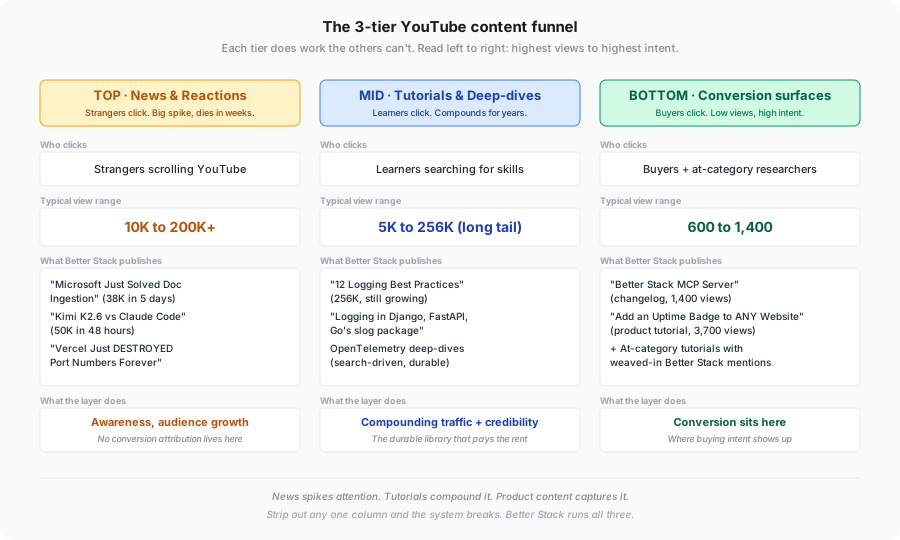
So, what makes the strategy work is that the newsroom sits on top of a tutorial moat. Act 2 built the durable library that still pays rent. Act 3 added the velocity. A pure-newsroom strategy without the tutorial floor would be all spike, no compounding. A pure-tutorial strategy without the news layer wouldn't break out, especially now that AI handles basic explainers.
How the team operates
Most of what's below came from Richard directly. The operational details are where the strategy stops just being "they make good videos".
The team and the cadence
Four people total: Richard, James, Andris, and Josh. Each one tries to ship three long videos a week. With shorts mixed in, the team puts out roughly ten videos a week, thirty a month, give or take a couple. There's no content calendar, no monthly editorial plan, no pre-approval flow before someone hits record.
The thing that makes the cadence sustainable is specialization. Richard owns the AI and Claude Code beat. The other three each have their own territories. Because nobody is context-switching between Figma tutorials and database explainers and observability deep-dives, the per-video research time stays short and the takes stay sharp. Anyone trying to ship one video a day across an entire dev surface area would burn out.
How they find topics
Twitter is the biggest source, but not Twitter the way most people use it. Richard runs a curated work feed, deliberately following only people who reliably post good dev news. He aggressively mutes anyone who clutters the feed with takes that don't translate into video material. James pioneered this inside the team and Richard adopted it. The result is a feed that looks more like a Bloomberg terminal than a social network. Twitter's Explore feature surfaces summaries of what's trending in that feed, which doubles as a daily signal.
The same practice applies to YouTube. A separate work YouTube account, trained to follow only dev creators, lets the algorithm do half the surfacing work. Whatever the broader dev community is watching shows up in the recommendation feed. Newsletters, GitHub trending repos, and Hugging Face papers fill in the rest, especially for AI-specific releases.
Use AI to gather intelligence
Richard runs a custom AI agent that scans the latest dev news every morning and picks the top ten candidates worth covering. That's the only AI tool baked into the workflow. There's no AI script generation, no AI voiceover, no AI thumbnails. The AI is a research filter, not a content engine.
In a category increasingly flooded with AI-generated tool reviews and AI-narrated explainers, audience becomes extremelly sensitive. So, staying up to date and adding your own angles and expertise on the topic should be your top priority.
You can see devs will grill you for even for a small resemblance of AI audio or opinion that is easily obtained or biased (without a reason) towards specific model preferences.
Editing: less is more
Richard told me he used to do heavy editing. Lots of effects, lots of time in post. Then the team ran experiments: same creator, one video edited heavily, another stripped down. The lighter ones did just as well, sometimes better. So they kept cutting. Same logic applied to scripts. They templated the structure so writing got faster, freeing more time for the topic itself.
The insight he kept circling back to is that polish isn't where the views come from. Substance and topic selection are. The team reallocated time away from production polish and into research and shipping. That's why the videos look slightly less polished than what a marketing agency would deliver, and why they outperform what a marketing agency would deliver.
The admin that survives
The team didn't always work this loose. Earlier in the channel's life, every creator had to submit five topic ideas a week for approval before recording. They scrapped it. The reason wasn't ideological. It was that the approval step was too slow, and slow is fatal when you're racing the news cycle. The flexibility you see now (no calendar, no approval, ship when ready) is something the team earned by killing process, not by skipping it.
What did survive is the Friday retro. Every video from the past week gets pulled into the same view: views, subscribers gained, click-through rate, retention curves. The team figures out which videos worked, why, and what to emulate.
The other surviving piece is YouTube's native A/B testing. Every video ships with three thumbnail variants and three title variants, and YouTube picks the winner. Between the retros and the A/B tests, the team isn't guessing what works. They're updating the playbook every Friday based on what the last thirty videos taught them.
One small operational rule worth knowing: Better Stack publishes a maximum of three videos in any 24-hour window. It's because YouTube caps subscriber notifications at three per channel per day, and anything beyond three goes silent into the feed. So the team schedules around the cap.
Experiments and other channels
Are you spreading thin across channels, or going deep on one?
This is worth saying explicitly because the SimilarWeb data at the top of this article makes it concrete. YouTube delivers 55.6% of Better Stack's social traffic. Their other channels (Instagram, X, LinkedIn, TikTok) combined deliver less than YouTube alone. Richard was clear about why: every platform has its own grammar, and you have to be an expert in each. Better Stack picked one and committed.
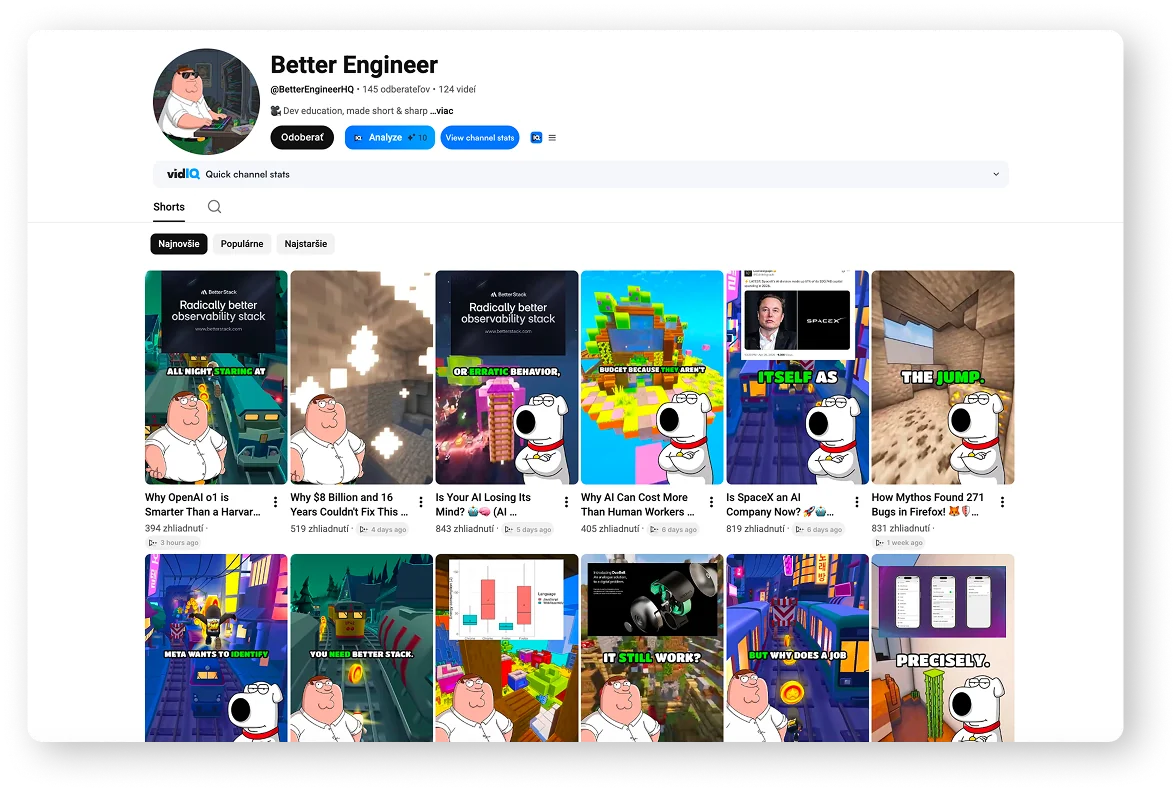
They do have a sister YouTube account called Better Engineer, with its own TikTok and Instagram. It only publishes AI videos. Richard's framing for that experiment is useful: "to have lots of different channels, you have to have one popular one." The main channel earns the right to spin off others. Most companies try the spin-off first and never get there.
If you're currently dividing one content team's energy across five social channels because the marketing dashboard demands a number for each, this is the playbook telling you to stop. Pick one. Win it. Then use the surplus to seed the next.
How to think about applying this
A few things to be honest about up front.
This isn't a universal playbook. Richard said this to me unprompted: the methods Better Stack uses, lots of videos across many topics, isn't a template that fits every company. If your goal is product education at depth (training enterprise users on a complex platform), this won't work. If your goal is brand recognition and developer mindshare in a market where the buyer cares what their devs think, this works very well.
So if you're thinking about doing this for your own company, here are the questions that matter, in order.
Who is this for: buyers or potential users?
In most B2B SaaS, the user and the buyer are different people. The buyer (VPs, CTOs, procurement) signs the contract. The user (the developer running the tool day to day) lives with the choice. Datadog's YouTube targets the buyer. Better Stack's targets the user. The bet we're talking about here is that buyers don't subscribe to YouTube channels, users do. And when a team picks a tool, the user is in most cases a decision maker. If your product has this split, your channel should target the user, even though they're not the one directly paying.
Are you willing to stop putting your brand name on the asset?
This is the hardest one and the one that tells you whether the rest of the strategy will survive. If your CMO needs the brand on every title and every thumbnail, you'll never ship "GOODBYE VERCEL." You'll ship "Better Stack vs Vercel," which performs worse and doesn't build the same audience.
Do you have the durable layer underneath the loud one?
Better Stack's #1 video is still a Docker tutorial from a year ago. The newsroom works because there's a layer of evergreen content that catches search traffic when news content burns out. If you only build the loud layer, you'll have a noisy channel that drops to zero the second you stop publishing.
The hardest part of applying any of this isn't the tactics. It's getting permission inside your company to optimize for the audience instead of for the brand. Better Stack got that permission, mostly by quietly running the experiment and letting the numbers do the convincing. That option is available to most teams. Whether anyone takes it is a different question.
All YouTube subscriber counts, video counts, and view data sourced directly from the public YouTube channels of @betterstack, @DatadogHQ, @Grafana, and @NewRelicInc as of April 2026. Format and headline analysis based on a manual review of Better Stack's full 938-video archive. View-per-hour benchmarks sourced from vidIQ analysis. Operational details about how the Better Stack YouTube team works (team size, cadence, tooling, content sourcing, review process) come from a conversation with Richard, one of the four people on the channel team, conducted in April 2026.